If you’ve spent any time in a barbershop lately, you’ve probably heard someone ask for a “Hispanic fade” or a “Mexican fade.” These two haircuts get lumped together all the time, but they’re not identical. Both are built on the same Hispanic & Mexican low taper fade foundation, yet the finishing touches, the texture, and the overall attitude set them apart.
This guide breaks down everything you need to know about the Hispanic & Mexican low taper fade: what makes each version unique, which one fits your face shape and hair type, how much it costs, and exactly what to say when you sit in the barber’s chair. Whether you want something clean and low-key for the office or sharp and bold for a night out, you’ll find the right cut here.
Fade haircuts have deep roots in barbershop culture across Latin America, where precision cutting and hands-on craftsmanship have always been a point of pride. That history is exactly why the Hispanic & Mexican low taper fade looks so different depending on which tradition shaped it, and why knowing the distinction actually matters before you sit in the chair.
What Is a Low Taper Fade?
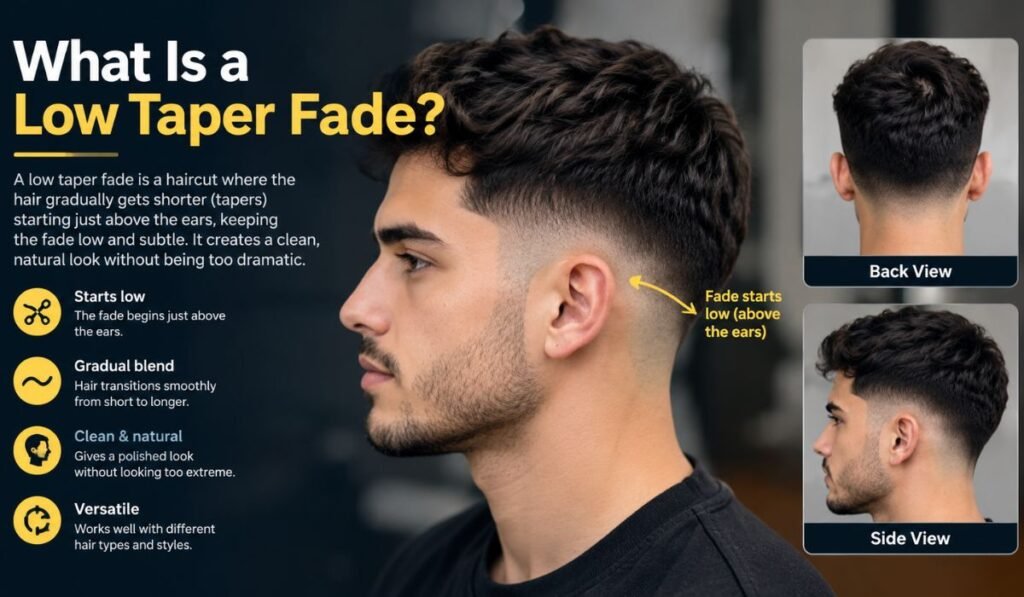
A low taper fade is a haircut where the hair gradually gets shorter starting near the ears and the neckline, instead of higher up on the sides of the head. The top stays longer, the sides blend downward in gentle stages, and the back tapers close to the skin without ever going fully bare.
Unlike a full low fade, which exposes bare scalp near the bottom, a taper fade never quite reaches skin. It simply thins the hair out gradually. That’s part of why the Hispanic & Mexican low taper fade has become such a go-to request — it’s subtle enough for work but still looks sharp.
This is different from a mid or high fade, where the blend starts much higher up the sides and creates a stronger contrast between long and short hair. A low taper keeps everything closer to the ears and neckline, so the change in length is barely noticeable at first glance. That subtlety is exactly what makes the Hispanic & Mexican low taper fade so easy to wear every day, whether you’re heading to class, to the office, or out with friends.
Low taper fades are popular because they:
- Work with almost any hair type, including straight, wavy, curly, and coarse hair
- Grow out slowly, so you don’t need a touch-up every week
- Look professional enough for the office but still stylish enough for weekends
- Pair well with beards, lineups, and different top lengths
- Suit nearly every face shape with small adjustments
Hispanic Low Taper Fade: Key Features & Best For
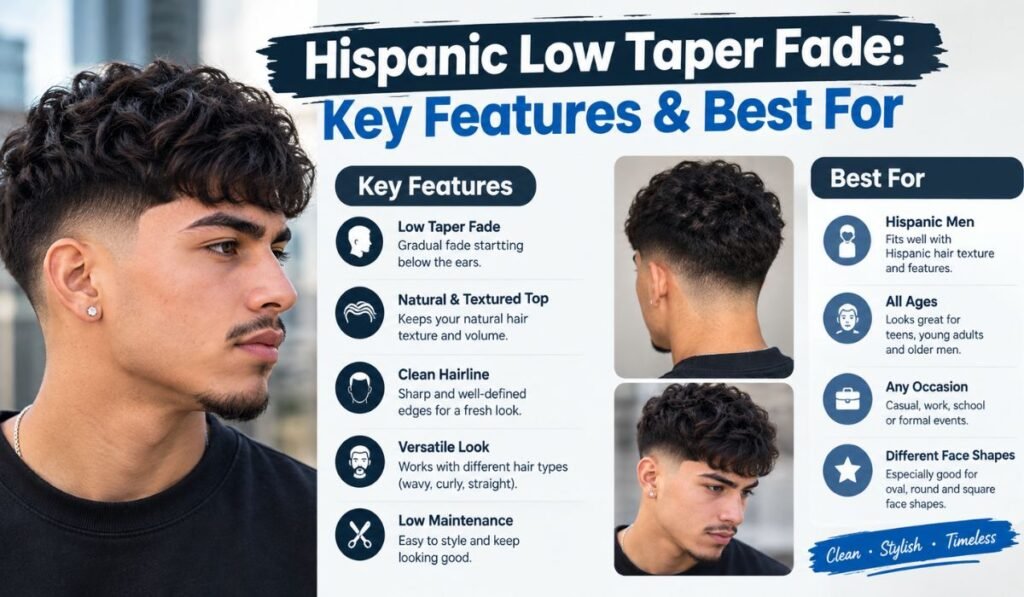
The Hispanic low taper fade draws on grooming traditions from across the Spanish-speaking world, including Mexico, Puerto Rico, Cuba, Colombia, and Spain. Instead of chasing sharp edges, this version of the Hispanic & Mexican low taper fade family focuses on a soft, balanced finish that looks polished from every angle.
Key Features
- Soft blend: The fade transitions smoothly with no harsh lines
- Natural hairline: Edges are neat but not razor-sharp
- Balanced proportions: The cut looks even and tidy from all sides
- Low-maintenance growth: Holds its shape well between visits
Best For
The Hispanic low taper fade is best for guys who want a clean, understated look that works in professional settings. It’s a safe, versatile pick if you want a haircut that reads as put-together without looking like you tried too hard.
Mexican Low Taper Fade: Key Features & Best For
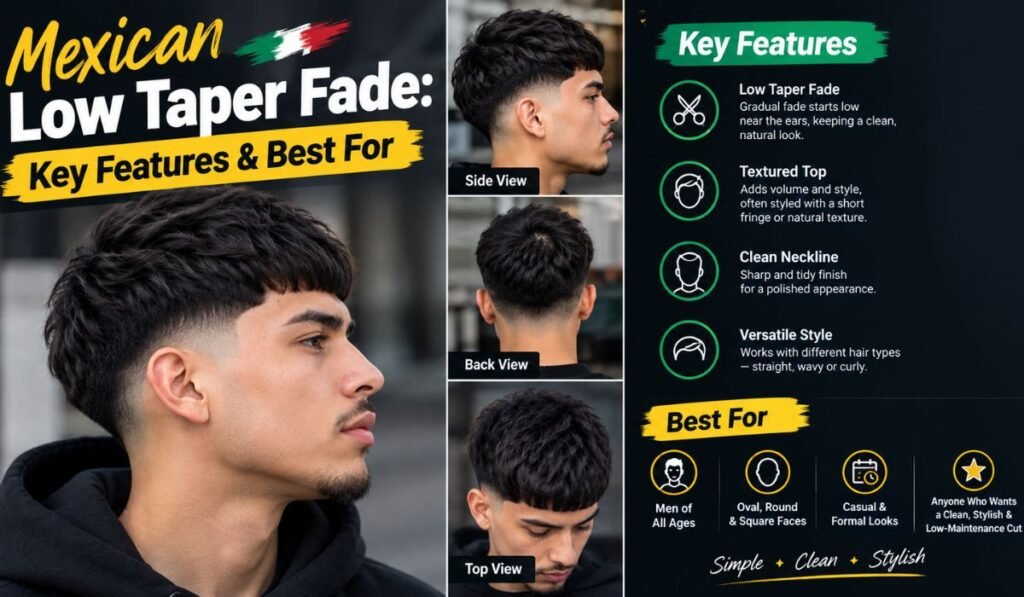
The Mexican low taper fade comes from a barbering tradition known for precision lineups, creative parting, and detailed clipper work. This side of the Hispanic & Mexican low taper fade conversation leans into sharper, more defined edges and bolder shapes.
Key Features
- Crisp lineup: A sharp, defined hairline frames the face
- Detailed edge work: Temples and neckline are cut with extra precision
- Bold top styles: Often paired with an Edgar cut, textured crop, or slicked-back top
- Cultural detailing: Some barbers add hard parts or simple line designs
Best For
The Mexican low taper fade suits anyone chasing a trendier, more structured look. It’s a great choice for nights out, social events, or anyone who wants their haircut to make a statement. Because the edge work is more detailed, it helps to find a barber who’s experienced with this style.
Read Related Post: Best Fades for Curly Hair – Easy & Complete Guide
Hispanic vs Mexican Low Taper Fade
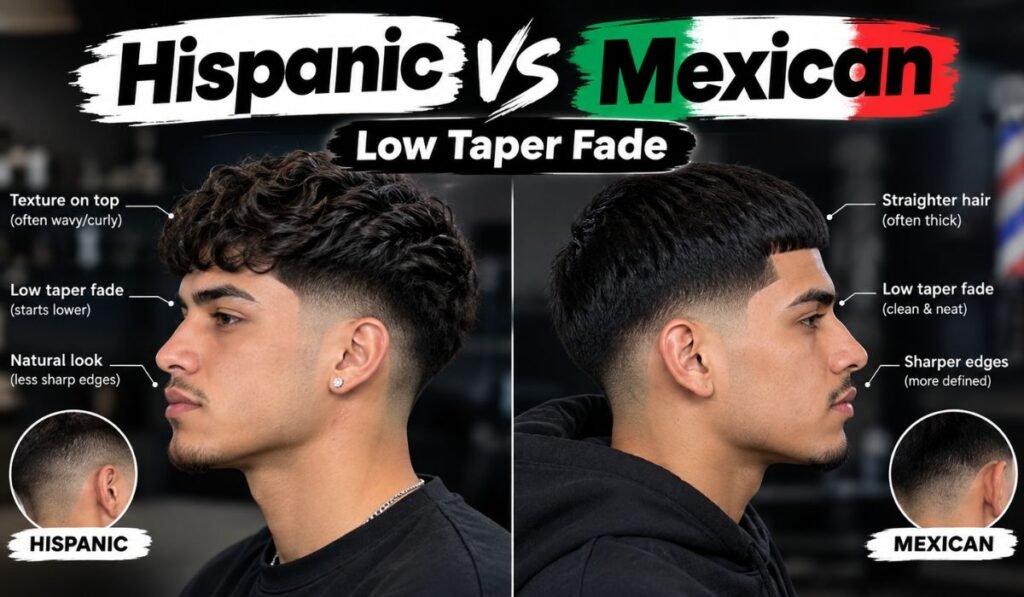
Both styles share the same low taper foundation, so the real differences come down to blend softness, edge sharpness, and overall vibe. Here’s a side-by-side look at the Hispanic & Mexican low taper fade comparison:
| Feature | Hispanic Low Taper Fade | Mexican Low Taper Fade |
| Overall vibe | Soft, natural, professional | Sharp, bold, stylish |
| Hairline | Neat but relaxed | Crisp, defined lineup |
| Blend style | Smooth, gradual | More structured, detailed |
| Best occasion | Work, school, everyday wear | Nights out, events, trend-driven looks |
| Upkeep | Every 2–3 weeks | Every 2–3 weeks, sometimes sooner for sharp lines |
| Barber skill needed | Standard fade experience | Detailed edge and lineup experience |
In short, the Hispanic version plays it safe and polished, while the Mexican version is built to stand out. Neither is objectively better — the right choice depends on your lifestyle, your workplace, and how much upkeep you’re willing to commit to.
Some barbers who specialize in Latino cutting techniques will tell you the difference really comes down to training and tradition rather than personal taste alone. A barber trained in Mexican barbershop culture often spends years perfecting lineup precision before ever touching a fade, while a barber focused on the broader Hispanic style prioritizes a smooth, even blend above sharp detailing. Knowing this can help you pick a barber who’s genuinely suited to the Hispanic & Mexican low taper fade style you want, instead of hoping any fade specialist can nail both equally well.
Popular Hispanic & Mexican Low Taper Fade Styles
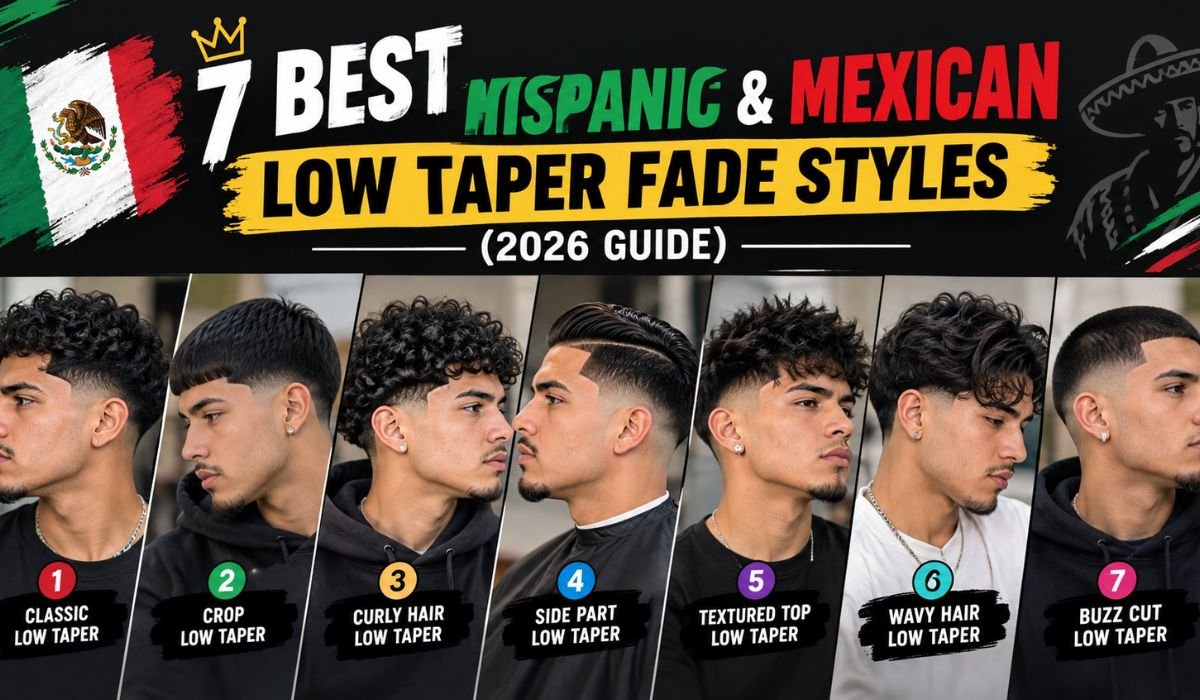
Here are seven of the most requested Hispanic & Mexican low taper fade variations barbers see right now. Bring a photo of any of these to your next appointment.
- Classic Hispanic low taper fade – A clean, simple everyday cut with a soft blend and natural hairline.
- Hispanic low taper fade with textured top – Adds light texture on top for a modern, low-effort finish.
- Mexican low taper fade with lineup – A crisp hairline that sharpens the whole face shape.
- Mexican low taper fade with beard – Connects a faded beard with the haircut for one cohesive look.
- Mexican low taper fade slick back – Combines a sharp fade with a smooth, formal top style.
- Curly low taper fade – Keeps natural curls loose and full on top while the sides stay tight and clean.
- Long hair low taper fade – Leaves extra length on top for a bolder, more dramatic contrast against the fade.
Each of these takes the same Hispanic & Mexican low taper fade base and finishes it differently, so you can match the look to your personal style and how much time you want to spend on maintenance.
Face Shape & Hair Type Guide
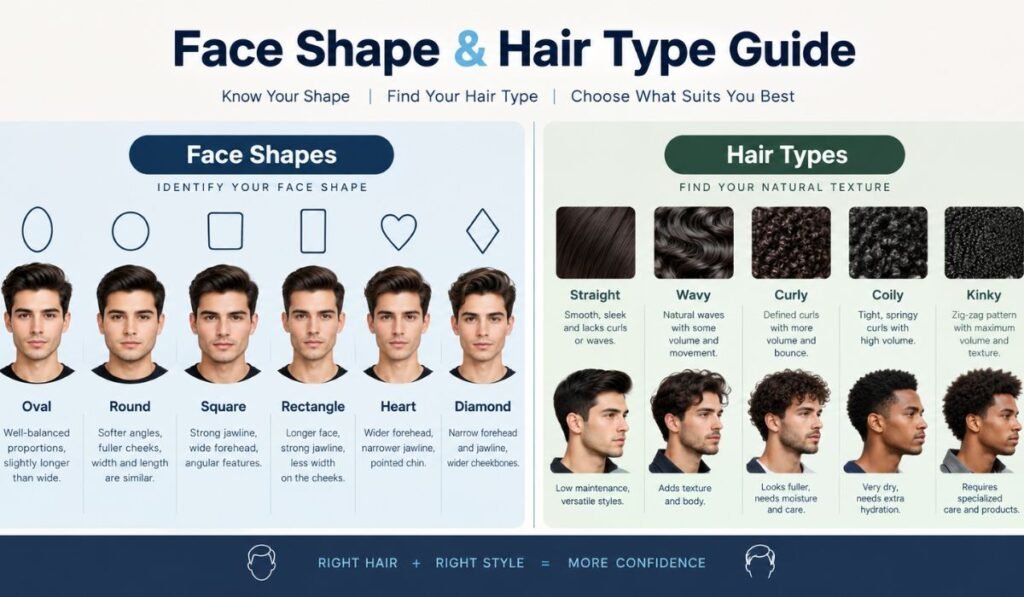
Not every version of the Hispanic & Mexican low taper fade works the same way on every face or every hair texture. Here’s a quick breakdown to help you pick the right one.
Face Shapes
| Face Shape | Recommended Style |
| Round | Mexican low taper fade — sharp angles help slim the face |
| Oval | Both styles work well; choose based on personal vibe |
| Square | Mexican low taper fade highlights a strong jawline |
| Long | Hispanic low taper fade with more volume on top adds balance |
| Heart-shaped | Hispanic low taper fade keeps proportions soft and even |
Hair Types
- Straight hair: Both styles hold their shape cleanly and look sharp
- Wavy hair: The natural hairline of the Hispanic version looks more effortless
- Curly hair: The Mexican low taper fade gives curls a sharper, more defined frame
- Thick or coarse hair: Both styles work well, but expect slightly faster growth and more frequent touch-ups
Face shape and hair type aren’t the only factors worth considering. Your daily routine matters too. If you’re not someone who styles your hair every morning, the Hispanic low taper fade tends to hold a clean look with minimal effort, since it doesn’t rely on a crisp lineup to look finished. If you enjoy spending a few extra minutes styling and don’t mind touching up your hairline between barber visits, the Mexican low taper fade rewards that extra attention with a sharper, more polished result.
How to Ask Your Barber
Walking into a barbershop without the right words can lead to a haircut you didn’t ask for. Keep your request simple and specific when describing the Hispanic & Mexican low taper fade you want.
Choose:
- Tell your barber you want a low taper fade, not a full skin fade
- Specify that the fade should start near the ears and neckline
- Say how much length you want left on top
- Mention whether you want it styled soft and natural (Hispanic) or sharp and defined (Mexican)
- If you have a beard, ask for it to be blended into the fade
- Bring a reference photo — it makes the conversation much easier
Styling & Care Tips
Getting a great Hispanic & Mexican low taper fade is only half the job. Keeping it looking fresh takes a little daily effort.
- Use a lightweight pomade or matte clay for texture without heaviness
- Blow-dry curly or wavy tops with a diffuser to keep natural pattern intact
- Wash hair 2–3 times a week to avoid stripping natural oils
- Apply a beard oil if your fade is paired with a beard fade
- Sleep with a silk or satin pillowcase to protect curl definition
- Trim your own hairline lightly between visits if it grows in fast
If your Hispanic & Mexican low taper fade includes a lineup, keep a small trimmer at home for light touch-ups around the neckline and edges between barber visits. This helps the cut hold its shape longer without needing a full appointment every single week. For curly or wavy tops, avoid brushing dry hair, since this can break up the natural curl pattern — finger-styling with a light cream tends to give a cleaner, more natural result.
Cost & Touch-Ups
Pricing for a Hispanic & Mexican low taper fade varies by location and barber experience, but here’s a general idea:
| Service | Average Cost |
| Standard low taper fade | $25–$45 |
| Fade with beard trim/blend | $35–$60 |
| Fade with design or hard part | $40–$70 |
| Barbershops in major cities | $50–$100+ |
To keep the fade sharp, plan on a touch-up every 2 to 3 weeks. Hispanic and Mexican hair textures tend to grow in fast, so waiting much longer can soften the lines and blur the blend.
Do & Don’t Tips
Do:
- Bring a reference photo to your appointment
- Ask specifically for a “low” taper, not a mid or high fade
- Book with a barber experienced in detailed lineups if going Mexican-style
- Keep up with touch-ups every 2–3 weeks
Don’t:
- Assume “Hispanic fade” and “Mexican fade” mean the exact same thing
- Skip mentioning your face shape or hair type to your barber
- Let the fade grow out past a month if you want it to stay sharp
- Over-style with heavy product, which can weigh down curls and waves
FAQ’s
Are Hispanic and Mexican low taper fades the same?
No. They share the same low taper base, but the Hispanic version is softer and more natural, while the Mexican version has sharper, more defined edges.
Which is better for office jobs?
The Hispanic low taper fade usually wins here since it reads as more relaxed and professional.
Which looks bolder?
The Mexican low taper fade, thanks to its crisp lineup and sharper detailing.
Are both good for curly hair?
Yes. Both styles work well with curly hair — it just depends on whether you want a soft frame or a sharp one.
Conclusion
The Hispanic & Mexican low taper fade has earned its spot as one of the most requested haircuts in barbershops today, and it’s easy to see why. It’s versatile, low-maintenance, and flattering across nearly every face shape and hair type. Whether you lean toward the soft, professional finish of the Hispanic style or the bold, sharp detailing of the Mexican style, the key to nailing the look is clear communication with your barber and staying on top of your touch-ups. Bring a reference photo, know your face shape, and you’ll walk out with a cut that actually matches what you asked for.
Alex is a passionate hairstyle enthusiast and the creator of WowFades. He loves exploring modern haircuts, stylish hairstyles, and fresh fade trends, sharing practical inspiration to help readers discover new looks and feel confident about their personal style.