
Want a beard that looks sharp, takes little time, and still works if your cheeks grow in patchy? A Van Dyke beard could be your answer. It pairs a pointed chin beard with a separate mustache and leaves the cheeks bare. Artists and royalty have worn it for about 400 years.
This guide covers 15 styles, a simple trim routine, the best matching haircuts, and the mistakes that ruin the shape. The advice follows standard barbering practice and what major grooming brands recommend, so a basic trimmer is enough to follow along.
What Is a Van Dyke Beard?
A Van Dyke beard is a pointed goatee combined with a mustache, where the two never touch. The cheeks, jawline, and neck stay clean-shaven. It is named after Anthony van Dyck, the 17th-century Flemish painter who portrayed nobles wearing it.
Key features:
- A pointed or tapered chin beard
- A separate mustache with a visible gap on both sides of the mouth
- Smooth cheeks, jawline, and neck
- Short to medium length, depending on the style
Van Dyke vs. Goatee vs. Anchor vs. Circle Beard
These four styles get mixed up constantly. Here is how they differ:
| Style | Mustache | Connected to chin hair? | Chin shape |
| Van Dyke | Yes | No | Pointed |
| Goatee | Optional | Sometimes | Rounded or natural |
| Circle beard | Yes | Yes | Round, closed loop |
| Anchor | Optional | No | Follows the jawline, rounded |
Why Choose a Van Dyke Beard?
- It adds length to a round face and sharpens the jaw.
- It works with patchy growth, since you only need chin and lip hair.
- It is low maintenance once the outline is set.
- It looks good short, long, or faded.
Quick Trim Guide (6 Steps)
Follow these steps to trim a Van Dyke beard at home:
- Grow it out. Let your beard grow 2–3 weeks, about 1–2 cm, so you have hair to shape.
- Comb downward. Brush the beard and mustache straight down so the hair lies flat.
- Clear the cheeks. Shave or trim your cheeks, jawline, and neck. Keep the chin patch about as wide as the corners of your mouth.
- Create the gap. Trim the hair at the corners of your mouth so the mustache floats separately from the chin beard. A gap of about 1 cm works well.
- Shape the point. Use a guard (4–6 mm) to even the chin beard, then taper the sides toward a point. Remove the guard only for the final outline.
- Finish. Apply a little beard oil, wax the mustache if you like, and check symmetry in the mirror.
What Are the Best Van Dyke Beard Styles?
Every Van Dyke beard style below follows the same base shape. The differences come down to length, sharpness, and extras. Use this table to match a style to your face first:
| Face shape | Best Van Dyke styles |
| Round | Pointed, Long, Classic |
| Square | Rounded, Short, Natural |
| Oval | Almost any style |
| Long / Oblong | Thick, Rounded, Short |
| Diamond | Classic, Modern Faded |
1. Classic Van Dyke

This is the original look. It has a medium-length pointed chin beard, a neat mustache, and smooth cheeks. Keep the gap between mustache and beard even on both sides. It suits most face shapes and is the best starting point for beginners.
2. Short Van Dyke
The short version uses a 4–6 mm guard on the chin and a tightly trimmed mustache. It looks clean, modern, and easy to manage. Trim every three to four days to keep the edges crisp.
3. Long / Extended Van Dyke
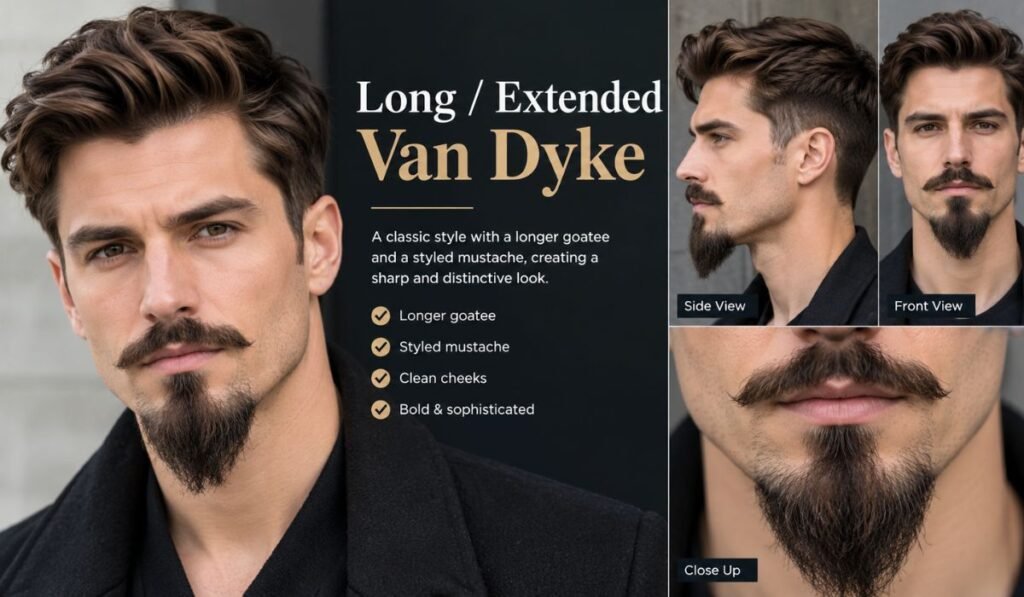
Here the chin beard grows 3–5 cm and tapers to a point. It makes a bold statement and lengthens a round or short face. Comb it daily and use a little balm to keep the tip from splitting.
4. Pointed Van Dyke
This style has a needle-sharp tip and angular sides. Scissors give you better control than a trimmer here. It works best on round faces because the sharp point adds length.
Read Related Post: 25 Best Heart Face Shape Hairstyles for Men
5. Rounded Van Dyke

The tip is softened into a gentle curve instead of a point. This takes the edge off a strong, square jaw and looks more approachable. It sits close to the anchor beard but stays shorter and tighter.
6. Stubble Van Dyke
Keep the whole shape at 1–2 mm. The outline stays defined, but the hair looks like heavy stubble. It is a great option if you can’t grow much length. Expect to trim every two to three days.
7. Disconnected Van Dyke (Wide Gap)
This version widens the gap between the mustache and chin beard to about 2 cm. The result is a sharper, more graphic look. It needs clean lines and a full enough mustache to hold its own.
8. Van Dyke with Handlebar Mustache

Grow the mustache about 1.5 cm or longer and curl the ends with wax. This pairing gives a vintage, theatrical feel. Keep the chin beard short so the mustache stays the focus.
9. Van Dyke with Soul Patch
Add a small patch of hair directly under the lower lip, separated from the chin beard by a tiny gap. It creates a layered, artistic look. Keep the patch small, or it will merge into one block of hair.
10. Modern / Faded Van Dyke

A barber fades the outline from short stubble into bare skin around the cheeks and neck. The shape looks softer and more current than a hard edge. Book a visit for the first shape, then maintain it at home.
11. Natural Van Dyke
Skip precise shaping. Clear the cheeks and neck, then let the chin beard and mustache grow with only light tidying. The look is relaxed and slightly rugged. It suits men who dislike daily grooming.
12. Thick Van Dyke

This style has a wider, denser chin beard that fills the full width of the chin. The added width balances a long or narrow face. It needs good growth density and regular conditioning to avoid a bushy look.
13. Van Dyke for Black Men
A Van Dyke beard works very well on coarse, curly hair because the shape holds cleanly. Use a trimmer with a guard instead of a close razor to reduce razor bumps. Always trim in the direction of growth and moisturize with oil daily. Sharp edges against the cheeks look especially striking.
14. Professional Van Dyke
Keep it short, even, and symmetrical, with a tidy mustache and a clean neckline. This version fits conservative offices and client-facing jobs. Trim every three to four days to keep it polished.
15. Salt and Pepper Van Dyke
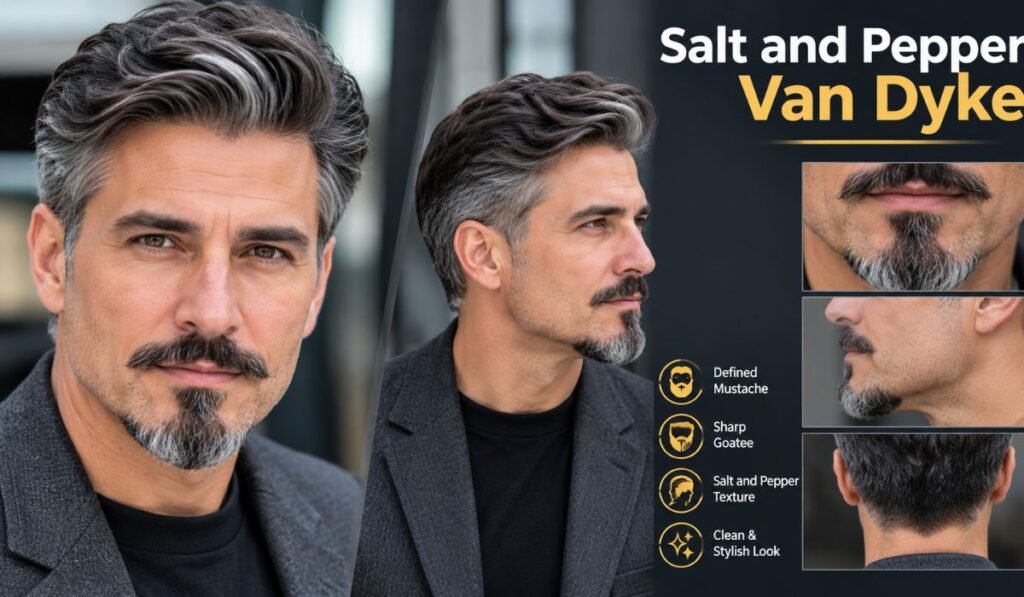
Gray and white hairs add a distinguished feel to the style. Gray hair is often coarser, so keep the length moderate and use a conditioning balm. If the beard turns yellow, use a gentle shampoo made for gray hair, and not too often.
What Haircuts Work Best with a Van Dyke Beard?
A neat haircut keeps the look balanced. If your beard is sharp, your hair should be too. Here are the top matches:
| Haircut | Why it works | Best for |
| Classic side part | Clean and timeless | Professional looks |
| Slick back | Highlights the face and beard shape | Formal, vintage styles |
| Pompadour / quiff | Adds height, balancing a pointed chin | Round faces |
| Textured crop | Casual and low effort | Natural and stubble styles |
| Low or mid fade | Blends smoothly into a faded beard | Modern Van Dyke |
| Buzz cut | Bold and minimal | Strong jawlines |
Tips for pairing:
- Match the sharpness: a crisp fade pairs best with a crisp beard line.
- Keep sideburns clean so they don’t merge with the cheeks.
- Add volume on top if you wear a long, pointed Van Dyke.
What Are the Most Common Van Dyke Mistakes? {#mistakes}
Most Van Dyke beard problems come from rushed trimming or poor planning. Avoid these:
- Letting the mustache touch the chin beard. This turns the style into a circle beard.
- Uneven gaps. Check both sides of the mouth in the mirror, and trim in small steps.
- Cutting too short too early. Once the hair is gone, you can’t fix the shape until it regrows.
- Ignoring the neckline. Stray neck hair makes the whole style look messy.
- Leaving stray cheek hair. Clean cheeks define the look, so shave them every day or two.
- Choosing the wrong length for your face. Long beards suit round faces, and shorter ones suit long faces.
- Skipping skin care. Dry, flaky skin shows up under a short beard, so moisturize after trimming.
- Trimming against the grain. This causes uneven lines and irritation.
FAQ’s
How long does it take to grow a Van Dyke Beard?
Most men need 2–4 weeks to get enough chin and lip hair to shape. Patchy growth may take longer.
What is the difference between a Van Dyke and a goatee?
A Van Dyke has a pointed chin beard and a separate mustache. A goatee can be rounder and sometimes connects to the mustache.
Can you grow a Van Dyke with patchy facial hair?
Yes. You only need chin and upper lip growth, and the cheeks stay shaved anyway.
Does a Van Dyke Beard look professional?
Yes, when it is kept short, symmetrical, and clean-edged. Regular trims keep it office-ready.
How do you maintain a Van Dyke Beard?
Trim every three to four days and shave the cheeks and neck regularly. Add beard oil for the chin beard and wax for the mustache.
Conclusion
A Van Dyke beard is one of the most versatile facial hair styles you can wear. It adds structure to a round face, suits patchy growth, and adapts from office-friendly to bold and theatrical. Pick the version that fits your face shape, set the outline carefully, and keep the gap between mustache and chin beard consistent.
Start with the classic cut, then experiment with length, fades, or a handlebar mustache as you get comfortable. With regular trimming and basic skin care, your Van Dyke beard will look sharp all year.

Alex is a passionate hairstyle enthusiast and the creator of WowFades. He loves exploring modern haircuts, stylish hairstyles, and fresh fade trends, sharing practical inspiration to help readers discover new looks and feel confident about their personal style.





1 thought on “15 Best Van Dyke Beard Styles with Trim Guide (2026)”