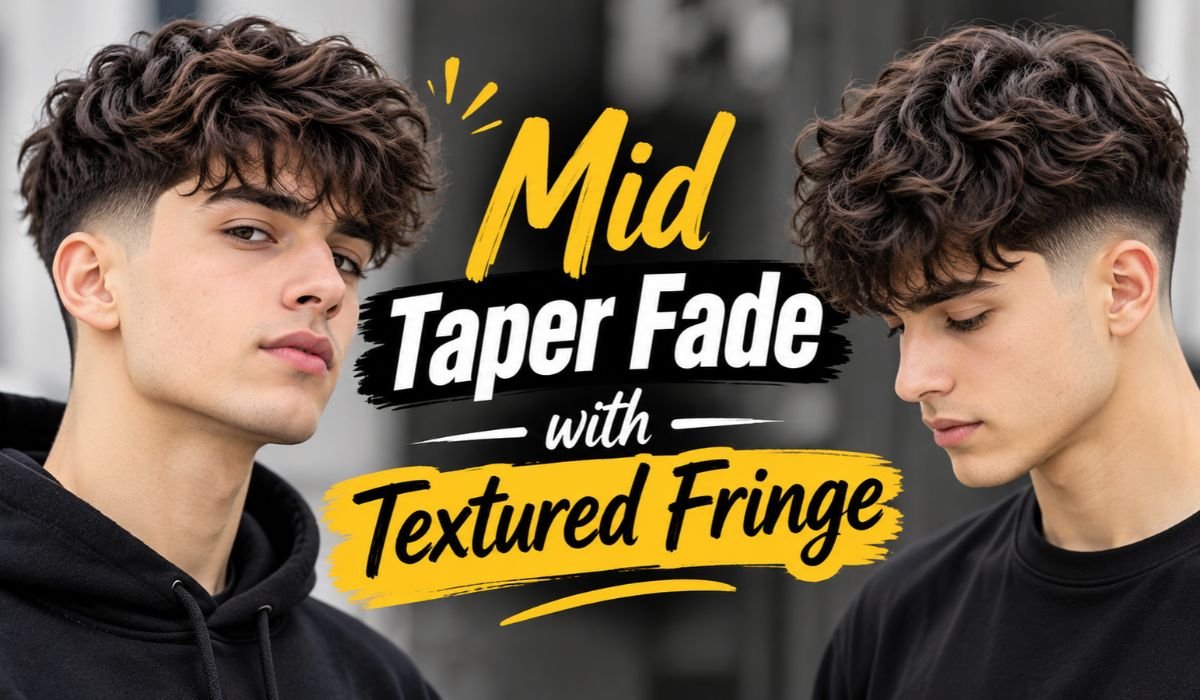
A mid taper fade with a textured fringe is a clean, low-effort haircut that works almost anywhere. The sides stay sharp. The top stays loose, choppy and easy to style in two minutes.
This guide shows what the cut looks like from every angle, how to ask for it, and how to style and maintain it. No fluff, just what you need before you sit in the barber’s chair.
Quick answer: A mid taper fade starts shortening the hair at the temple and blends down toward the ear and neckline. On top, a textured fringe is cut in choppy pieces and falls between mid-forehead and the brows. Together they give you a neat, modern look that is easy to wear.
Textured Fringe and Mid Taper: Three Useful Views
One photo is not enough. A front shot shows the fringe but hides the taper. A side shot shows the taper but hides the neckline. Save all three angles before you book.
| View | What to check | What it tells your barber |
| Front | Fringe length, choppy ends, hairline coverage | Where the fringe should land |
| Side | Where the taper starts and how it blends around the ear | The height of the mid taper fade |
| Back | Neckline shape and weight at the nape | Blocked, tapered or rounded finish |
Use this simple rule when you browse photos:
- Look for a taper that starts near the temple, not high above the ear.
- Look for ends that break into pieces, not a straight edge.
- Look for a soft blend, not a hard shaved line.
A textured fringe haircut that looks good in all three views will usually look good on you.
Do not worry if you cannot find a perfect match. Most barbers can work from two good photos and a clear description. The side view matters most, because it shows the exact spot where the taper begins. If your reference photo is shot from the front only, say so and ask your barber what the sides would look like on your head shape.
What “Textured Fringe” Actually Means
A textured fringe is a men’s haircut where the top is brought forward so the hair falls across the forehead in broken, choppy pieces. It does not end in a flat, straight line. The fringe usually lands between mid-forehead and the brows.
The texture is cut in. Barbers use point cutting, razoring or texturizing shears to remove bulk and create separation. That is why the style looks styled even when you barely touch it.
Compare your preferences first
Before you pick a version, decide three things.
| Choice | Option A | Option B | Option C |
| Fringe length | Mid-forehead | Just above the brows | At the brows |
| Texture level | Light and soft | Medium and choppy | Heavy and piecey |
| Sides | Mid taper | Mid taper fade to skin | Low taper (softer) |
If you want an everyday, office-safe look, go with a mid-forehead fringe, light texture and a classic mid taper. If you want a bolder look, go longer and choppier.
Textured Fringe vs Messy Fringe
People use these words as if they mean the same thing. They don’t.
| Feature | Textured fringe | Messy fringe |
| How it is made | Cut in with point cutting or texturizing | Often just left unstyled or grown out |
| Shape | Controlled, with clear direction | Unpredictable |
| Styling time | 1 to 2 minutes | Varies |
| Looks on day 3 | Still shaped | Can look flat or untidy |
A messy look is a styling result. A textured fringe is a cut. If you want the look to hold up, ask for the cut, not just the mess.
Read Related Post: Mid Taper vs Low Taper: Differences, Height & Which to Choose
Why Pair It with a Mid Taper?
The mid taper fade sits in the middle. It is not as bold as a high fade and not as soft as a low taper. That balance is why a mid taper fringe is so popular.
Here is why the pairing works:
- Balanced shape. The tapered sides keep the head looking tidy while the top carries the volume.
- Flexible. It suits a suit, a hoodie or gym gear.
- Face-friendly. The fringe softens the forehead and the taper adds structure at the temples.
- Clean grow-out. A taper keeps some length on the sides, so it ages better than a skin-tight cut.
- Easy styling. The sides need nothing. You only style the top.
This is also why a textured fringe with mid taper is a safe first choice if you are moving away from a longer cut or a very high fade.
It also suits a wide range of ages and jobs. Students, office workers and creatives all wear a mid taper fade fringe without it looking out of place. The textured fringe mid taper combination is hard to get wrong, as long as the barber understands the length you want on top.
Mid Taper or Mid Fade Under a Textured Fringe?
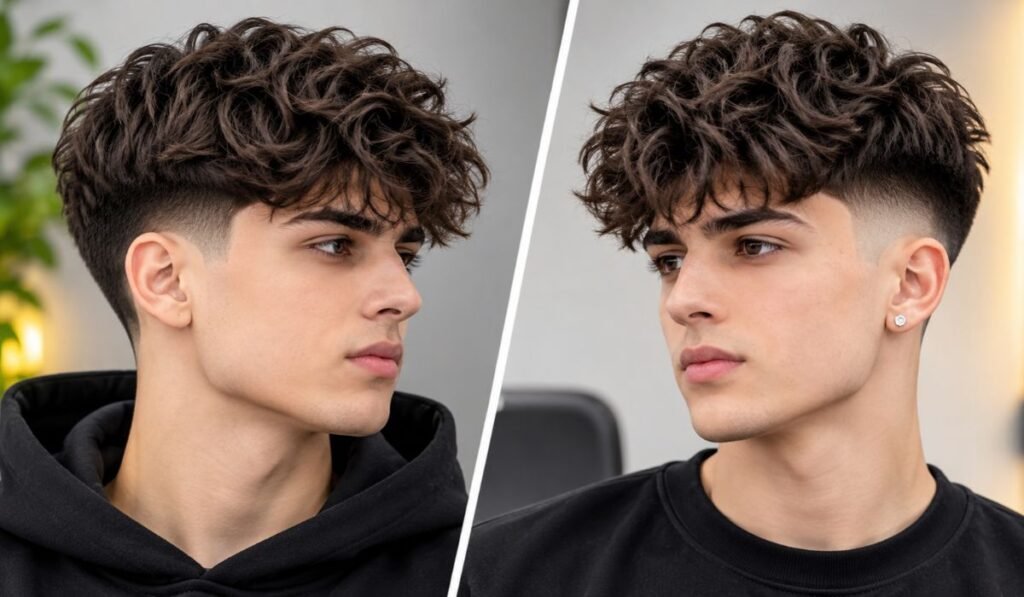
Barbers use “taper” and “fade” loosely, and the two terms overlap. A mid taper fade is usually a taper that begins at mid height and stays softer. A mid fade goes shorter and may reach skin.
| Feature | Mid taper | Mid fade |
| Starting point | Temple height | Temple height |
| Bottom length | Short but not bald | Can go to skin |
| Look | Soft and natural | Sharp and high-contrast |
| Grow-out | Gentle | Shows regrowth faster |
| Best with | Softer textured fringe | Heavy, high-contrast fringe |
A simple way to choose:
- Want a polished but soft look? Pick the taper.
- Want strong contrast with the top? Pick the fade.
- Not sure? Ask for a mid taper fade to a #1 at the base. You can always go shorter next time.
Always say whether you want skin at the bottom. “Fade” alone can mean very different things from barber to barber. Pointing at your temple to show where it should start removes the guesswork.
Length: How Much Fringe Do You Need?
Length changes the whole mood of the cut. The right amount depends on your hair type and your face shape.
| Top length | Fringe lands | Best for | Style result |
| 1.5 to 2 inches | Mid-forehead | Fine or straight hair | Neat, short and sharp |
| 2 to 3 inches | Just above the brows | Most hair types | The classic textured fringe haircut |
| 3 to 4 inches | At the brows | Thick, wavy or curly hair | Fuller, more dramatic |
A few face-shape notes from common barbering advice:
- Oblong face: A slightly longer fringe helps balance the length.
- Diamond face: A fringe evens out a narrower forehead.
- Round face: Keep the top a little lifted so the cut does not look flat.
- High forehead: A fringe covers it easily.
If you are unsure, start at the shorter end. Hair grows back. A fringe that is too long is easy to fix, but a fringe that is too short is not.
What to Ask Your Barber
Barbers can only cut what they understand. Photos help, but words matter just as much.
Give your barber these five details:
- Taper height: “Mid taper, starting at the temple.”
- Bottom length: “Skin at the base” or “a #1 at the base.”
- Top length: Give a number in inches, such as 2 to 3 inches.
- Fringe position: “Falls to just above my brows.”
- Texture: “Point cut it so the ends are choppy, not blunt.”
You can say it in one line:
“I’d like a mid taper fade with a textured fringe, about 2.5 inches on top, point cut, with the fringe pushed forward. Leave a little weight at the neck.”
Three extra tips:
- Bring photos from the front, side and back.
- Mention your hair type: straight, wavy, thick or fine.
- Say how you plan to style it, with a dryer or by hand.
If your photo shows a blowout, remember that the barber cuts the length and the taper. The volume comes from your hairdryer.
Avoid these common mistakes when you explain the cut:
- Saying only “fade” and not saying how high or how short.
- Asking for “a bit off the top” without giving a length.
- Forgetting to mention that you want the fringe textured, not straight across.
- Skipping the neckline. Ask for a natural taper if you want it to grow out neatly.
Three-Step Styling Routine
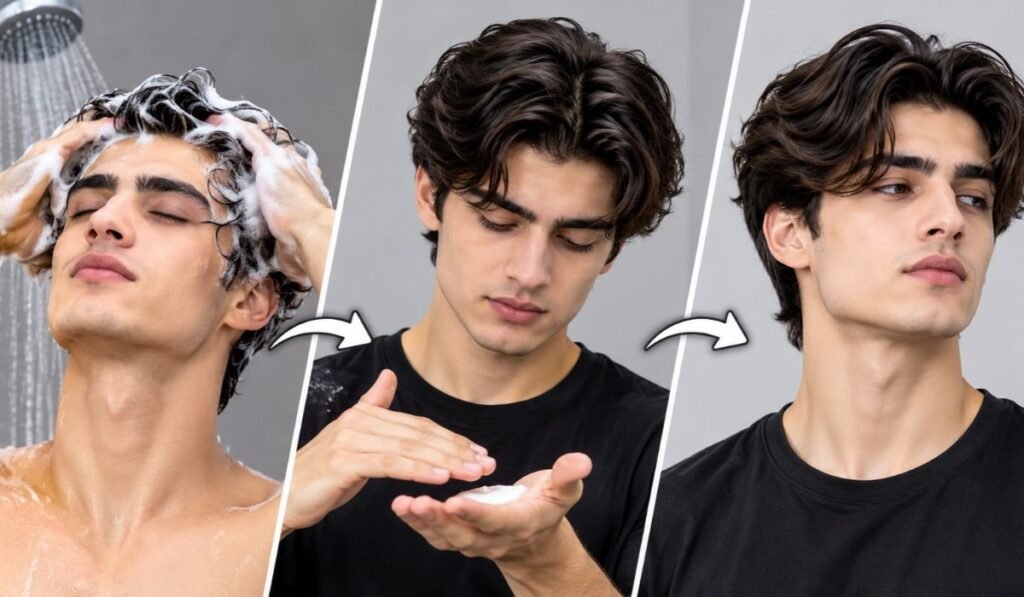
This routine takes about two minutes. It works for most hair types.
- Dry and direct. Start with damp hair. Blow-dry it forward with your fingers, aiming the air from the back to the front. This sets the fringe direction and adds lift.
- Add product. Rub a pea-sized amount of matte clay or paste between your palms. Work it through the top from roots to ends. For fine hair, use a texturizing or sea salt spray instead.
- Shape and set. Pinch and twist the ends of the fringe into small pieces. Finish with a light-hold spray if you need it to last all day.
A few quick rules:
- Use less product than you think. Too much makes the fringe clump and look greasy.
- Choose matte over shiny for a natural finish.
- Don’t comb the fringe flat after styling. You will lose the texture.
Quick fixes for bad hair days:
- Fringe too flat: Add a little texturizing spray at the roots and blow-dry it forward again.
- Fringe too stiff: Use less product and warm it up in your palms first.
- Fringe sticking up: Wet your hands lightly and press the hair down before restyling.
Straight vs Wavy vs Thick Hair
The same cut behaves differently on different hair. Here is how to adjust.
Straight hair
Straight hair shows every line, so texture matters most. Ask your barber to point cut the ends and keep the top around 2 inches. Use a texturizing spray or light clay to add grip. Without it, straight hair tends to fall flat and look like a blunt fringe.
Wavy hair
Wavy hair has natural movement, so it needs the least work. A textured fringe with mid taper suits it well because the waves give you built-in texture. Ask for a little extra length, around 2.5 to 3 inches, so the wave can show. A light cream or sea salt spray helps define it without weighing it down.
Thick hair
Thick hair can look bulky on top. Ask your barber to thin out the weight inside the fringe with texturizing shears. Keep the length at 2.5 to 3 inches so the fringe does not puff out. A slightly stronger paste helps control the volume.
| Hair type | Top length | Barber request | Best product |
| Straight | About 2 in | Point cut, add texture | Sea salt spray or light clay |
| Wavy | 2.5 to 3 in | Keep length, light thinning | Cream or light paste |
| Thick | 2.5 to 3 in | Thin out weight inside | Strong matte paste |
Maintenance and the Blunt-Line Problem
A mid taper fade needs regular upkeep. The sides lose their shape first, and regrowth shows around the ears and neck within a few weeks.
| Part | Trim every | Why |
| Sides and neckline | 3 to 4 weeks | Keeps the taper clean |
| Fringe and top | 4 to 6 weeks | Keeps the texture and length |
| Skin fade version | 2 to 3 weeks | Regrowth shows faster |
What is the blunt-line problem?
The blunt line is the flat, straight edge that appears when the fringe is cut straight across. It makes the cut look heavy and school-boy neat instead of textured. It is the most common mistake with this style.
How to avoid it:
- Ask for point cutting, not a straight cut.
- Ask the barber to remove weight from the ends.
- Never trim your own fringe straight across at home.
- If you do tidy it, snip into the ends vertically with sharp scissors.
If your fringe already looks blunt, a barber can fix it in a few minutes by breaking up the edge. It does not need a full re-cut.
Keep a short grooming kit at home to stretch the time between visits: a small pair of trimmers for the neckline, a matte clay, a texturizing spray and a wide-tooth comb. A quick neckline clean-up between visits keeps the mid taper fade looking fresh without touching the fringe.
FAQ’s
What is a mid taper fade with a textured fringe? It is a haircut with sides that taper from the temple down, and a choppy fringe on top that falls toward the forehead.
How long should the top be for a textured fringe? Two to three inches suits most people, with the fringe landing at or just above the brows.
Is a mid taper fade fringe good for thin hair? Yes. Ask for light layering and use a texturizing spray to add volume.
How often should I get a trim? Every three to four weeks keeps the sides sharp and the fringe in shape.
What product is best for a textured fringe haircut? A matte clay or paste gives the best hold without shine. Use only a pea-sized amount.
Can I wear a textured fringe with mid taper to the office? Yes. Keep the texture light, the fringe short and the sides neat.
Conclusion
The mid taper fade with a textured fringe stays popular because it is simple. The taper keeps the sides clean. The fringe adds shape and movement. Together they give you a haircut that looks good with minimal effort.
To get it right, remember four things. Show your barber three angles. Give exact lengths in inches. Ask for point cutting to avoid the blunt line. Book a trim every three to four weeks. Use the length table and styling routine above as your checklist. With the right instructions, a mid taper fade and textured fringe can work for straight, wavy or thick hair, and for almost any face shape.

Alex is a passionate hairstyle enthusiast and the creator of WowFades. He loves exploring modern haircuts, stylish hairstyles, and fresh fade trends, sharing practical inspiration to help readers discover new looks and feel confident about their personal style.









1 thought on “Mid Taper Fade with Textured Fringe: Photos, Cut & Style”