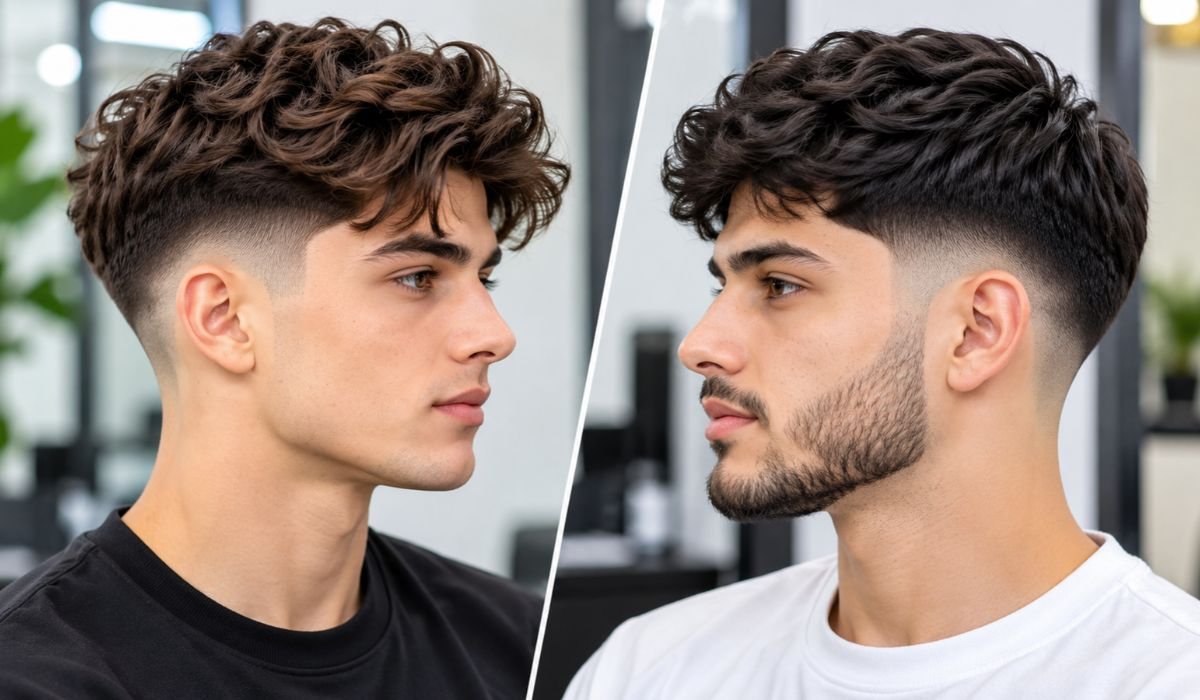
A taper is one of the cleanest haircuts a man can wear. The sides and back get gradually shorter, and the hair on top stays longer. The only big question is how high that blend should start. That is where Mid Taper vs Low Taper becomes a real decision. Both cuts look sharp, but they feel very different once you walk out of the barbershop.
This guide breaks down the height, the look, the maintenance and the exact words to use with your barber. By the end, you will know which taper fits your hair, your face and your routine.
Low Taper vs Mid Taper: Placement Views
Fade height is the whole story here. The taper starts at a different point on the head, and that one change shifts the entire outline.
- Low taper: The blend starts around the sideburns and the nape of the neck. It stays close to the ear and neckline.
- Mid taper: The blend starts around the temple, roughly halfway up the side of the head.
Think of the head in three zones: low, middle and high. In Mid Taper vs Low Taper, the low version works only in the bottom zone. The mid version moves up into the middle zone, so more of the side of the head is cut short.
Every head is shaped differently, so exact placement varies. A good barber adjusts the line to your skull, not to a ruler. If you need a quick visual, a low taper hugs the ear, and a mid taper sits clearly above it.
Remember one rule: the back should match the sides. A low taper on the sideburns needs a low taper at the nape.
Mid Taper vs Low Taper: The Main Differences
At a glance, the two cuts look similar. The details below show where they separate.
| Feature | Low Taper | Mid Taper |
| Starting point | Sideburns and nape | Temple level, mid-side of head |
| Contrast | Soft and subtle | Moderate and noticeable |
| Overall vibe | Classic, conservative | Modern, balanced |
| Regrowth | Grows out softly | Grows out faster, shows sooner |
| Best clean-up time | Every 3–4 weeks | Every 2–3 weeks |
| Office friendly | Excellent | Very good |
| Styling flexibility | Great with longer tops | Great with textured or short tops |
In short, the low taper is the quiet choice. The mid taper is the confident choice. Neither is better. They simply send different signals.
A low taper keeps most of your natural hair shape. A mid taper trims away more of the sides, so the top looks fuller and the head looks a little slimmer.
Compare your preferences first
Before you book, answer these quick questions:
- Do you want people to notice the haircut? Yes points to mid. No points to low.
- Do you work in a strict dress-code job? Low is the safest.
- How often will you visit the barber? Every 4 weeks suits low. Every 2–3 weeks suits mid.
- Is your hair thick on the sides? Mid removes more bulk.
- Are you new to tapers? Start low. You can always go higher next time.
If most of your answers lean one way, you have your answer already.
Read Related Post: Gabbie Carter Age, Bio, Real Name, Husband, Height, Net Worth
What Is a Low Taper?
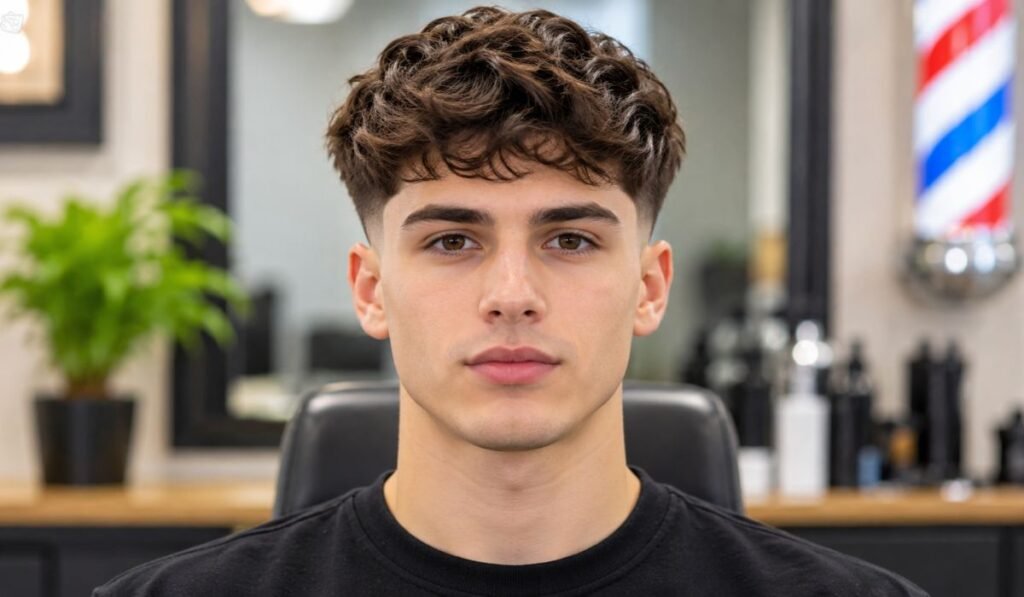
A low taper is a gentle gradient that starts low on the head. The hair shortens slowly around the sideburns, behind the ears and along the nape. Everything above that stays longer.
The effect is clean but natural. Most people will not even say “taper.” They will just think you look well groomed.
Key traits of a low taper:
- Starts just above the ear and at the neckline
- Very soft transition, with little visible contrast
- Keeps the hairline natural
- Grows out gracefully
- Works with almost any style on top
Pros
- Easy to wear in any setting
- Needs fewer touch-ups
- Low risk if you are trying a taper for the first time
Cons
- Less dramatic, so the style can look plain
- Does little to slim a thick side profile
The low taper is popular with pompadours, side parts, slick backs, quiffs and longer natural textures. If you want a low taper that looks tidy on a Monday and relaxed on a Saturday, this is the one.
What Is a Mid Taper?
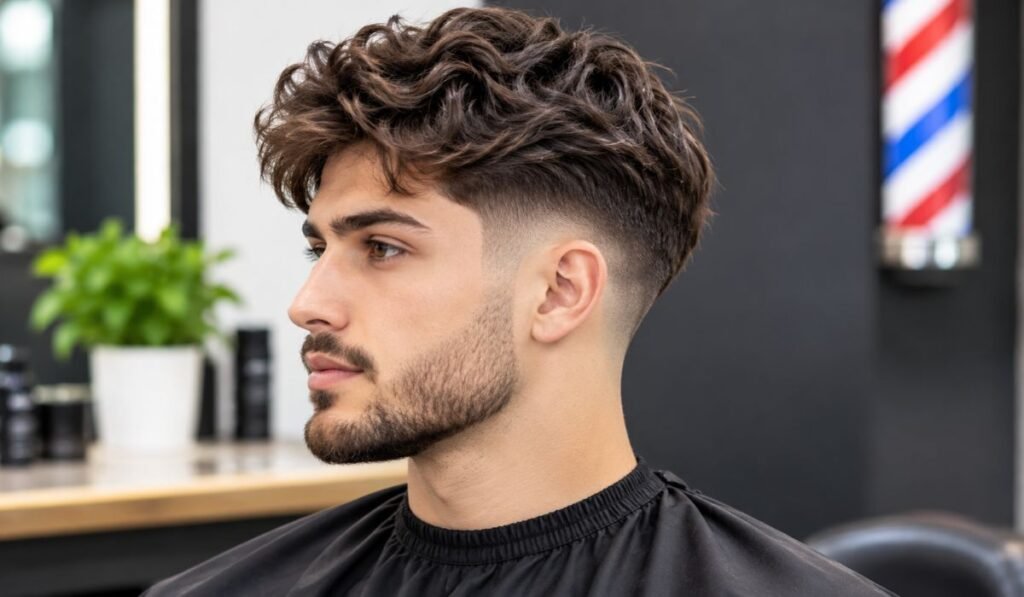
A mid taper starts higher, around the temple or the middle of the sides. The blend is more visible, and the hair on the lower sides gets noticeably shorter.
It sits between a low taper and a high taper. That middle position is why barbers often call it the sweet spot. You get definition without going extreme.
Key traits of a mid taper:
- Starts around the temple or mid-side of the head
- Clear but smooth contrast
- Slims the sides and adds height to the top
- Looks sharp with short and medium lengths
- Needs slightly more upkeep
Pros
- Looks modern and intentional
- Works on many head shapes
- Makes top texture stand out
Cons
- Shows regrowth sooner
- Can feel bold if your workplace is very formal
The mid version suits textured crops, French crops, short quiffs, curls and buzzed styles. It is also a smart step up for anyone who wants more edge than a low taper offers.
Mid Taper vs Low Taper for Different Hair Types
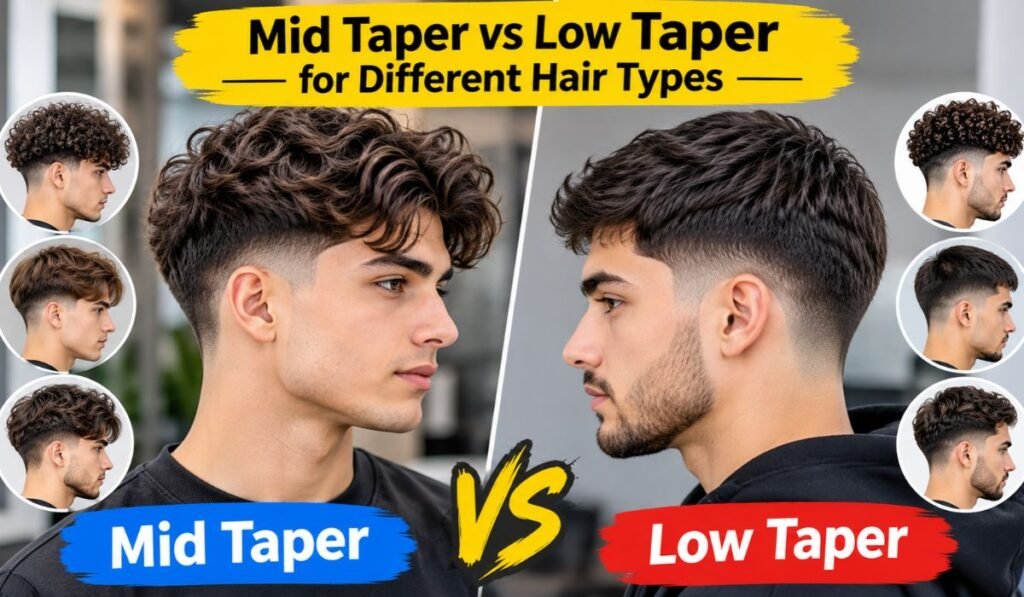
Your hair type changes how each cut behaves. The same taper can look completely different on straight hair and on coils.
Straight Hair
Straight hair shows every line, so the blend has to be clean.
- Low taper: Looks neat and refined. It pairs well with a side part or comb over.
- Mid taper: Adds clear shape, especially with a textured crop or fringe.
If your straight hair is fine, choose a low taper. A higher blend can expose thin spots near the temples. If your hair is thick, a mid taper removes bulk and keeps the sides from puffing out.
Wavy Hair
Wavy hair has natural movement, and a taper keeps that movement tidy.
- Low taper: Leaves enough length on the sides to keep a soft, relaxed wave.
- Mid taper: Controls side volume and lets the waves on top take center stage.
Wavy hair often flares out at the sides as it grows. A mid taper stops that early. It is a good pick if you like a cleaner outline.
Curly and Coily Hair
Curly and coily textures love tapers because the contrast defines the curl pattern.
- Low taper: Frames the curls gently and protects the natural hairline. It is ideal for twist outs and longer curls.
- Mid taper: Creates stronger separation between the sides and the curls. It works very well with high-top curls, sponge twists and short coils.
A barber who understands curly hair is key. Ask to see their past work on similar textures. A clean blend on coils takes patience and the right clippers.
For anyone comparing Mid Taper vs Low Taper on textured hair, the mid usually gives more definition, while the low gives more softness.
Which Taper Is Better for Your Face Shape?
Face shape does not decide everything, but it helps. The goal is balance. A taper changes how wide or long your face looks.
| Face Shape | Better Option | Why |
| Oval | Either | Balanced face suits both |
| Round | Mid taper | Slims the sides and adds visual height |
| Square | Low taper | Softens strong angles, keeps width natural |
| Oblong / Long | Low taper | Avoids making the face look longer |
| Heart | Low taper | Keeps balance near the jaw |
| Diamond | Mid taper | Keeps the sides tight, so cheekbones stand out |
A few simple rules:
- Round faces gain from the extra height a mid taper creates.
- Long faces should avoid too much shortness on the sides.
- If your cheekbones are your best feature, a mid taper shows them off.
Not sure of your face shape? Ask your barber during the consultation. They see hundreds of heads a month and can tell quickly.
Which Looks More Professional?
Both are professional. Neither is a risky haircut.
Still, there is a small difference in tone:
- Low taper: Reads as classic, calm and conservative. It is the safer choice for law, banking, healthcare, teaching and corporate jobs.
- Mid taper: Reads as polished and current. It fits creative roles, tech, sales, hospitality and modern offices.
In a strict Mid Taper vs Low Taper office debate, the low taper wins on formality. The mid taper wins if you want to look sharp without looking stiff.
If you wear suits often, a low taper with a side part is hard to beat. If your style is smart casual, a mid taper with texture on top feels more natural.
Mid Taper vs Low Taper Maintenance
Maintenance is where many people change their minds. A cut that looks great on day one can look messy by week three.
Low taper upkeep
- Barber visit every 3–4 weeks
- Grows out softly, so it looks tidy for longer
- Neckline can look fuzzy first, so ask for a quick neck clean-up between cuts
Mid taper upkeep
- Barber visit every 2–3 weeks
- The contrast fades faster, so the line blurs sooner
- Needs light home care to keep the sides crisp
Here is a quick comparison:
| Maintenance Factor | Low Taper | Mid Taper |
| Visit frequency | 3–4 weeks | 2–3 weeks |
| Regrowth visibility | Low | Medium |
| Daily styling effort | Low | Low to medium |
| Cost over time | Lower | Slightly higher |
Simple home tips for both:
- Wash hair regularly so the skin and edges stay clean.
- Use a light pomade, clay or cream for hold. Pick based on your hair type.
- Moisturize the scalp. Dry skin shows more on tapered sides.
- Avoid cutting the sides yourself. A small mistake shows quickly.
If your schedule is busy, the low taper vs mid taper question often ends right here. Low costs less time. Mid costs a bit more, and rewards you with a sharper outline.
What to Tell Your Barber
Clear communication saves you from a bad haircut. Saying “give me a taper” is not enough. Always mention height, length and finish.
Bring a photo if you can. A picture removes guesswork, because barbers read pictures better than adjectives.
Low Taper Request
Use words like these:
- “I would like a low taper, starting at the sideburns and nape.”
- “Keep the sides a little longer, with a soft blend.”
- “Leave the length on top, and tidy the neckline.”
Add a guard number if you know one, such as a #2 or #3 at the shortest point. Say whether you want a natural or a squared neckline.
Mid Taper Request
Use words like these:
- “I would like a mid taper, starting around my temple.”
- “Blend smoothly into the sides and back.”
- “Keep the top textured, and clean up the sideburns.”
If you are unsure, say: “Start low, and we can go higher if needed.” Most barbers appreciate this. It is easy to take more hair off, but impossible to put it back.
Always confirm the back matches the sides. A mismatch looks unbalanced from behind.
Common Mistakes to Avoid
Even a great haircut can go wrong. Watch for these errors:
- Choosing without a reference photo. Words can mean different things to different barbers.
- Ignoring your hair type. Fine hair and very thick hair react differently to taper height.
- Picking the wrong height for your job. A bold line may not suit a conservative office.
- Forgetting the back. The nape must match the sides.
- Skipping maintenance. A taper needs regular clean-ups to look intentional.
- Going too high on a first try. Start lower if you are unsure.
- Mixing up taper and fade. A taper shortens gradually and usually leaves length. A skin fade goes down to the skin and has stronger contrast.
- Not telling the barber about cowlicks. Strong growth patterns may need a small change in placement.
- Copying a style that ignores your face shape. Use the photo as a guide, not a rule.
- Comparing Mid Taper vs Low Taper only by trend. Choose by what suits you, not what is viral.
Still Not Sure Which Taper to Choose?
Use this quick guide:
Choose a low taper if you:
- Want a subtle, classic look
- Work in a formal environment
- Prefer fewer barber visits
- Have a long or oblong face
- Are trying a taper for the first time
Choose a mid taper if you:
- Want a clearer, more modern outline
- Have thick hair on the sides
- Have a round or diamond face
- Like short or textured tops
- Do not mind a visit every 2–3 weeks
Still undecided? Ask for a low taper first. If you want more edge at the next visit, move up to a mid taper. This low vs mid taper test costs you nothing and removes the guesswork.
You can also ask your barber for a consultation. Most will study your head shape, hairline and growth patterns, and suggest a height that works.
FAQ’s
1. What is the main difference between a mid taper and a low taper?
A low taper starts near the ears and neckline, while a mid taper starts higher, around the temple. The mid version has stronger contrast.
2. Which is better, a low taper or a mid taper?
Neither is better. Low suits a soft, classic look, and mid suits a sharper, modern one.
3. Which taper looks more professional?
The low taper is slightly more conservative, but both are office friendly.
4. Which taper is easier to maintain?
A low taper is easier. It grows out softly and needs a trim every 3–4 weeks.
5. How often should I get a mid taper touched up?
Every 2–3 weeks keeps the line crisp.
6. Does a mid taper suit curly hair?
Yes. It defines curls and gives clean separation between the sides and the top.
7. Which taper suits a round face?
A mid taper usually works best, as it slims the sides and adds height.
8. Is a taper the same as a fade?
Not exactly. A taper shortens gradually and keeps more length, while a fade often goes much shorter, even to the skin.
9. What should I ask my barber for?
State the height (low or mid), the guard length, and the neckline shape. A photo helps.
10. Can I switch from a low taper to a mid taper later?
Yes. Going higher is easy, so start low if you are unsure.
Conclusion
The Mid Taper vs Low Taper choice comes down to height, contrast and upkeep. A low taper is soft, classic and easy to maintain. A mid taper is sharper, more visible and slightly more demanding.
Match the cut to your face shape, hair type and workplace. Bring a photo, use clear words and ask your barber for advice. If you are still unsure, start low and move up.Either way, a good taper always looks clean. Pick the one that fits your life, and book your next visit with confidence.

Alex is a passionate hairstyle enthusiast and the creator of WowFades. He loves exploring modern haircuts, stylish hairstyles, and fresh fade trends, sharing practical inspiration to help readers discover new looks and feel confident about their personal style.









1 thought on “Mid Taper vs Low Taper: Differences, Height & Which to Choose”