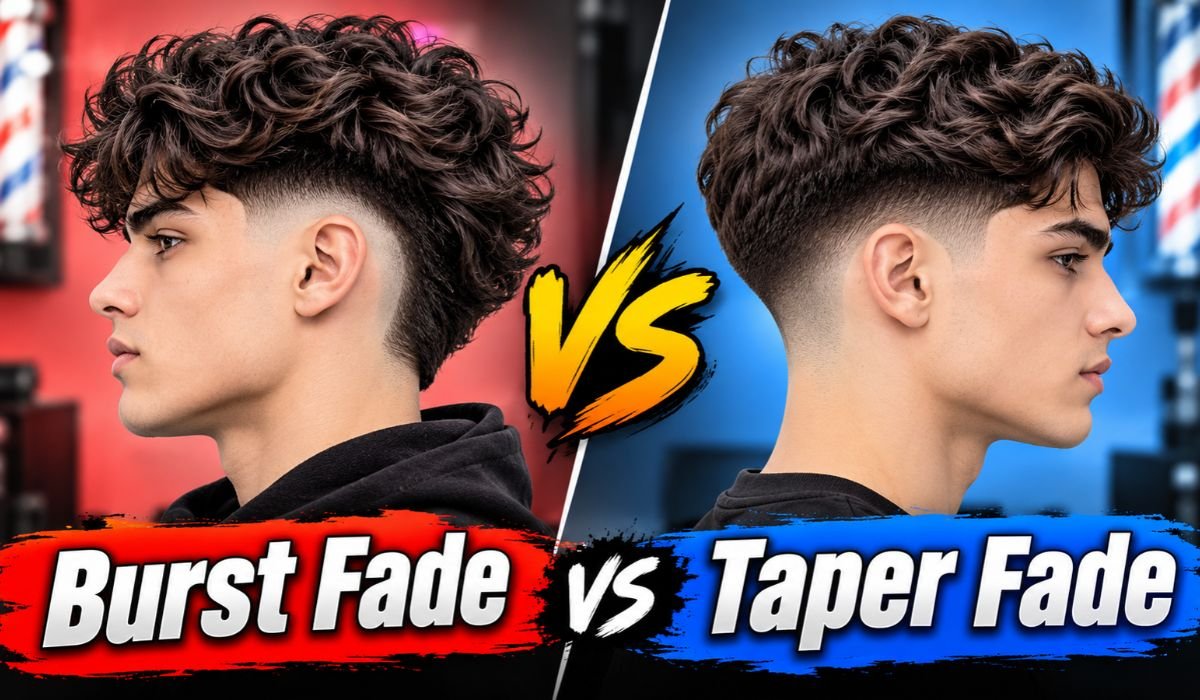
Choosing between a Burst Fade vs Taper Fade can be difficult if you want a modern haircut that matches your hair texture, face shape, and personal style. Both haircuts create a clean, blended appearance, but they differ in where the hair is shortened, how the fade is shaped, and how much length remains around the sides and back.
A burst fade creates a rounded, semicircular blend around the ears, while a taper fade gradually shortens the hair around the temples, sideburns, and neckline. One delivers a more noticeable, modern appearance, whereas the other offers a subtle and versatile finish.
Understanding these differences can help you choose a haircut that suits your everyday routine and professional lifestyle. Whether you prefer curly hair, a textured fringe, a mullet, or a classic hairstyle, this guide explains the differences, maintenance requirements, and what to tell your barber before getting your next haircut.
Burst Fade vs Taper: Ear, Temple and Nape Views
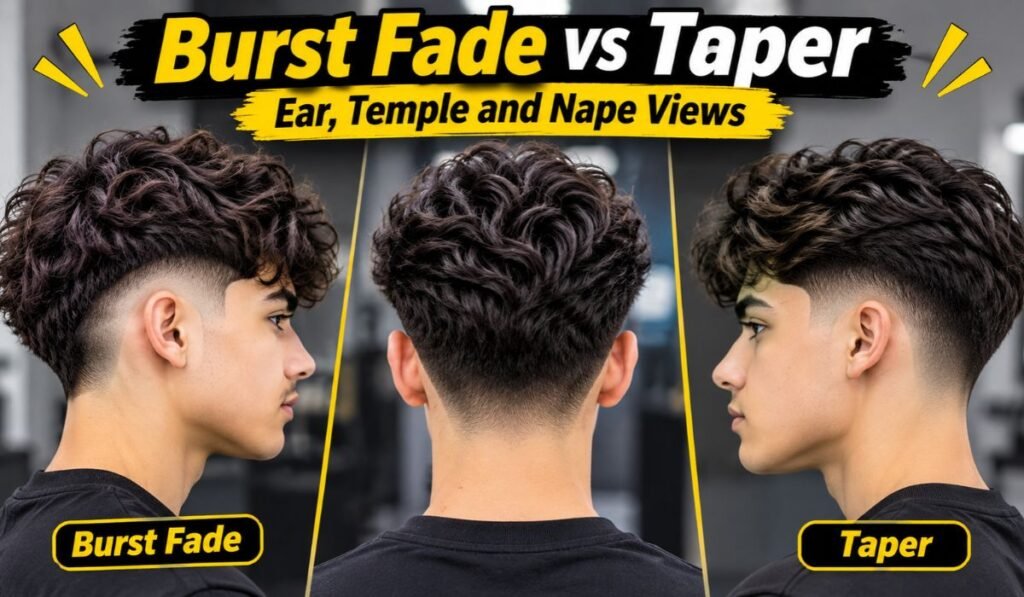
The easiest way to understand the difference is to examine the haircut from three angles: around the ears, near the temples, and at the nape.
A burst fade focuses on creating a rounded shape around the ear. The shortest hair sits behind and around the ear before gradually blending into longer hair. Depending on the design, the back can retain considerable length.
A taper fade focuses on the edges instead. It gradually shortens the hair around the temples, sideburns, and neckline while keeping most of the side hair relatively full.
Here is how both styles compare:
| Feature | Burst Fade | Taper Fade |
| Ear area | Rounded semicircular fade | Usually keeps more hair around the ear |
| Temple | Depends on the chosen design | Gradually shortened |
| Side panels | Shortened around the ear | Mostly retain their length |
| Nape | Often left longer | Cleanly tapered |
| Appearance | Bold and modern | Clean and classic |
| Best pairings | Mohawk, mullet, curly top | Side part, crop, textured fringe |
| Maintenance | Around 2–4 weeks | Around 3–5 weeks |
Neither haircut has to reach bare skin. You can request a skin, zero, or shadow finish depending on your preferred level of contrast.
What Is a Taper?
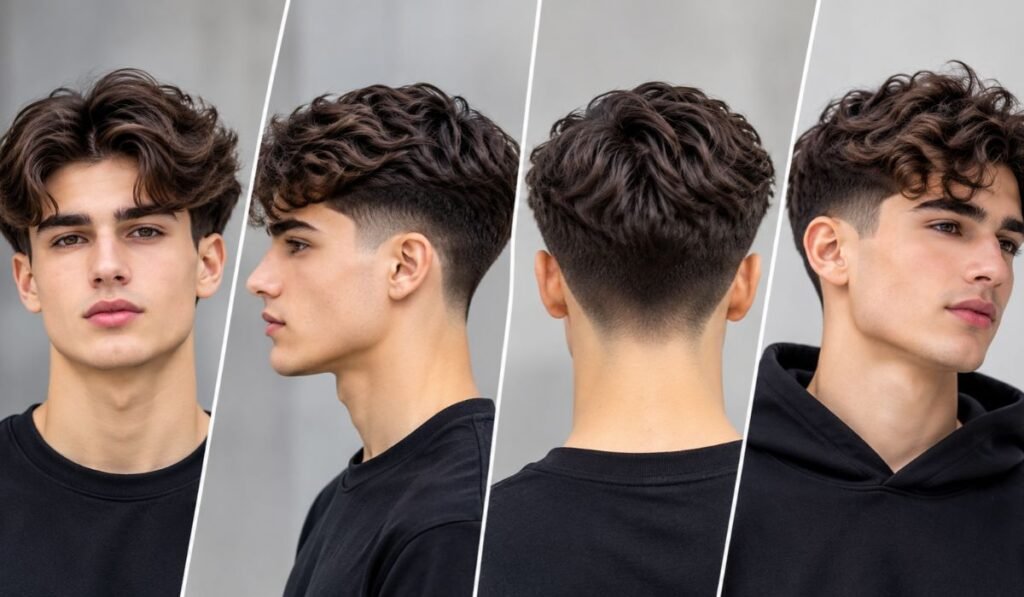
A taper is a haircut technique in which the hair gradually becomes shorter toward the edges of the head. Instead of removing a large section of hair from the sides, a barber creates a smooth transition around specific areas.
A traditional taper generally focuses on the temples, sideburns, and neckline. The remaining hair keeps its natural length, making this haircut suitable for people who prefer a neat appearance without dramatically changing their hairstyle.
There are several popular variations:
- Low taper: Creates a subtle blend near the bottom of the hairline.
- Mid taper: Starts slightly higher and produces a more noticeable transition.
- High taper: Concentrates the shorter blend around the upper temple area.
- Skin taper: Gradually blends the hair down to bare skin.
- Shadow taper: Keeps some visible hair at the shortest point for a softer finish.
One major advantage of a taper is its versatility. It works with short, medium, and longer hairstyles.
For example, you can combine it with a textured crop, slick back, side part, curly fringe, or natural afro. It also works well in professional environments because it keeps the edges clean without creating an overly dramatic appearance.
What Is a Burst Fade?
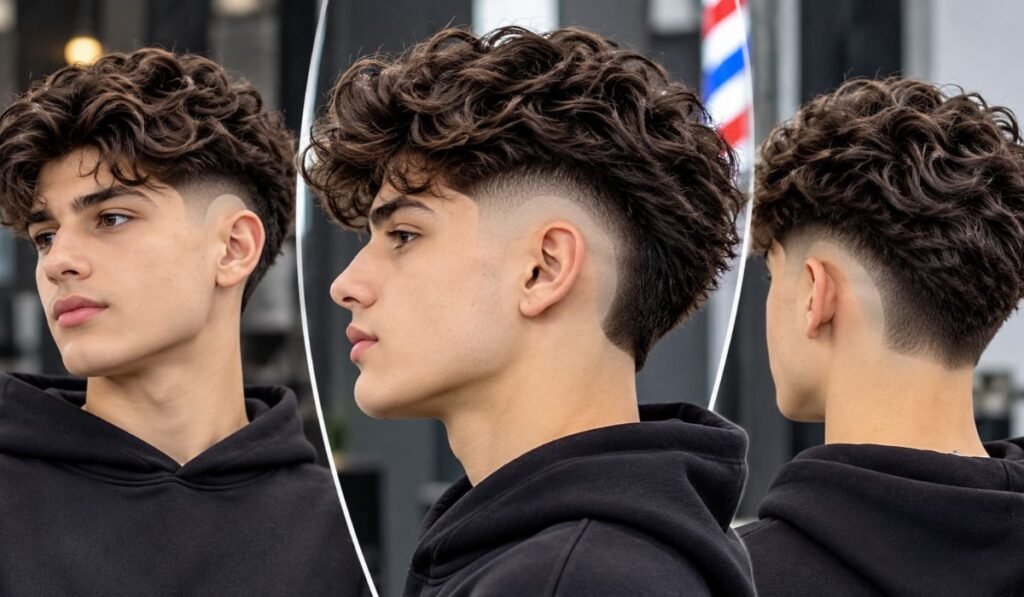
A burst fade is a modern haircut that creates a curved, semicircular fade around the ears. Instead of following a straight line across the sides, the barber gradually shortens the hair in a rounded pattern.
The shortest section usually sits behind the ear, while the surrounding hair becomes progressively longer as the fade moves outward and upward.
This technique creates a distinctive shape that resembles a sunburst. It also allows the barber to preserve more length at the back, making it particularly popular with mohawks, mullets, and textured hairstyles.
Some popular variations include:
- Low burst fade: Keeps the curved fade close to the ear for a subtle appearance.
- Mid burst fade: Creates a balanced transition with moderate contrast.
- High burst fade: Extends the curved section higher around the ear for a bolder finish.
- Burst skin fade: Blends the lowest section down to bare skin.
- Curly burst fade: Combines the rounded fade with natural curls on top.
The burst fade is especially attractive for people who want their haircut to have a noticeable shape without removing too much length from the back.
Read Related Post: Mid Taper Fade with Textured Fringe: Photos, Cut & Style
What Does Burst Taper Mean?
A burst taper combines the rounded fading technique of a burst fade with additional tapering around the hairline or neckline.
The term can describe slightly different designs depending on the barber. Some use it for a burst-shaped fade around the ears with a clean neckline, while others create a softer transition that preserves more hair around the back.
A burst taper fade can be a good option if you want the curved appearance of a burst fade without making the entire haircut look extremely short.
The main difference is that a standard burst fade focuses on the rounded area around the ears, while a burst taper may include additional blending around the temples and nape.
You may also hear the terms taper burst fade and taper burst when searching for hairstyle inspiration. These names often describe overlapping haircut designs rather than completely separate techniques.
Before choosing one, ask your barber to confirm:
- How high the curved fade should reach.
- Whether the area around the ears should reach skin.
- How much length should remain at the back.
- Whether the neckline should receive an additional taper.
- How the top should blend into the sides.
This prevents confusion and helps you get the exact appearance you want.
Burst Fade vs Taper Fade: Which Looks Better for Your Hair Texture?
Your natural hair texture plays an important role in how a haircut looks. Both styles can work with different hair types, but the right combination of length, blending, and styling can make a noticeable difference.
Straight Hair
Straight hair makes the fade lines and blending details more visible. A burst fade creates a noticeable curved outline around the ears, especially when paired with a textured crop, messy fringe, or short pompadour.
A taper fade offers a cleaner and more understated appearance. It works particularly well with side-parted hairstyles, slick backs, and longer straight hair.
Best choice: Choose a burst fade if you want a modern, defined shape. Choose a taper if you prefer a classic and professional appearance.
Wavy Hair
Wavy hair naturally creates movement and volume, making it suitable for both styles.
A burst fade can highlight the waves on top while creating a smooth transition around the ears. It also works nicely with a messy fringe, middle part, or textured hairstyle.
A taper fade keeps the sides looking natural while allowing the waves to remain the main feature of your haircut.
Best choice: A burst fade offers more visual contrast, while a taper provides a relaxed and balanced appearance.
Curly Hair
Curly hair is an excellent match for a burst fade because the rounded shape around the ears complements the natural volume of curls.
You can combine it with a curly fringe, short curly top, or curly mohawk. The shorter sides also make the curls on top stand out.
A taper fade is equally useful if you want to maintain your natural curl pattern without removing too much hair from the sides.
Best choice: Choose a burst fade for a more defined and modern haircut. Choose a taper if you want a subtle finish with natural volume.
Coily Hair
Coily hair, including tightly curled textures, works beautifully with both haircut styles.
A burst fade can create a sharp outline around the ears while preserving volume on top. Popular combinations include sponge twists, short afros, waves, and frohawks.
A taper fade is another excellent option because it cleans up the temples and neckline without dramatically changing the overall shape.
If you experience irritation or ingrown hairs from very close shaving, consider requesting a guarded finish instead of a razor-close skin fade.
Best choice: A burst fade creates a stronger visual statement, while a taper maintains a more natural and traditional appearance.
What About Face Shape?
Your face shape can help you decide how high or low your fade should be. However, the overall hairstyle, top length, and natural hair volume matter just as much as the fade itself.
Here are some useful recommendations:
| Face Shape | Recommended Style | Why It Works |
| Round | Mid or high burst fade | Added top volume can create a longer appearance |
| Oval | Both styles | Offers flexibility with different hairstyles |
| Square | Low burst or taper | Creates a balanced overall appearance |
| Long | Low taper or low burst | Avoids adding excessive height |
| Diamond | Low or mid taper | Maintains balance around the temples |
| Heart | Low taper | Keeps the overall silhouette balanced |
For a round face, consider adding some height through a textured top or curly hairstyle. If you have a longer face, a lower fade with moderate top length may provide better proportions.
Remember that these are styling suggestions, not strict rules. Your preferred appearance and hair growth pattern should influence the final decision.
Which Is More Professional?
If you work in a corporate environment, attend formal events, or prefer traditional grooming, a taper fade is generally the safer choice.
It creates clean edges around the temples and neckline while maintaining most of your natural hair length. This makes it suitable for business meetings, office environments, and everyday professional settings.
A burst fade has a more distinctive appearance because of its rounded shape around the ears. However, that does not mean it cannot look professional.
A low burst fade with a subtle finish and neatly styled top can look polished without appearing overly dramatic.
Consider these differences:
- Taper fade: Best for conservative workplaces and classic hairstyles.
- Low burst fade: Suitable for people who want a modern but relatively subtle haircut.
- Mid burst fade: Offers a balance between traditional and contemporary styling.
- High burst fade: Better for people who enjoy bold and noticeable hairstyles.
Your barber can adjust the fade height and shortest finish to make either haircut appropriate for your lifestyle.
Maintenance and Grow-Out
Maintenance is another important factor when choosing between these two haircuts. Both require occasional trimming, but the areas where regrowth becomes noticeable are different.
A burst fade usually loses its sharp curved definition around the ears first. A taper fade generally starts looking less clean around the sideburns and neckline.
How Often Should You Get a Trim?
| Haircut | Suggested Touch-Up | Maintenance Level |
| Low burst fade | Every 3–4 weeks | Moderate |
| Mid burst fade | Every 2–3 weeks | Moderate to high |
| High burst fade | Every 2–3 weeks | High |
| Low taper | Every 3–5 weeks | Low to moderate |
| Mid taper | Every 3–4 weeks | Moderate |
| Skin taper | Every 2–3 weeks | High |
These are general estimates. Hair growth speed, fade height, and personal preferences can change how frequently you need a haircut.
Which Haircut Grows Out Better?
A taper fade generally offers a softer grow-out because it focuses on smaller sections around the hairline. As the hair grows, the transition becomes less defined without completely changing the overall hairstyle.
A burst fade can also grow out naturally, but its curved outline may become less noticeable as the hair behind the ears gets longer.
If you want to maintain a freshly cut appearance, schedule regular barber appointments and avoid waiting until the fade completely loses its shape.
Simple Maintenance Tips
To keep either haircut looking fresh:
- Wash your hair regularly using a shampoo suitable for your hair type.
- Use a lightweight conditioner to maintain softness and manageability.
- Apply a suitable styling product to control your top hair.
- Avoid trimming the curved fade yourself unless you have experience.
- Keep the neckline and sideburns neat between barber appointments.
- Use a suitable moisturizer if your scalp becomes dry after close clipping.
You do not need an expensive grooming routine. Consistent care and regular trims are usually enough.
What to Tell Your Barber
Choosing the right haircut is only half the process. Explaining exactly what you want is equally important.
Barbers may interpret terms such as burst fade, taper burst, and low taper differently. Instead of relying only on a haircut name, explain the shape, height, length, and finish you prefer.
What to Say in the Chair
If you want a burst fade, you can say:
I want a low or mid burst fade with a rounded shape around both ears. Keep the back longer, blend the sides smoothly, and leave enough length on top for my preferred hairstyle. I would like a soft finish rather than an extremely high fade.
If you prefer a taper fade, say:
I want a clean low taper around my temples, sideburns, and neckline. Keep most of the length on the sides and blend everything naturally. Please maintain the length on top and avoid taking the fade too high.
For a taper burst fade haircut, explain whether you want a curved fade around the ears combined with a separate neckline taper.
What to Bring and Confirm Before the Cut
A reference picture can make the consultation much easier. Choose photographs that show the haircut from the side and back rather than relying on a front-facing picture alone.
Before the barber starts, confirm:
- Fade height: Low, mid, or high.
- Shortest length: Skin, zero, half guard, or a longer guard.
- Ear shape: Rounded burst or natural taper.
- Back length: Keep the nape long or taper it.
- Top hairstyle: Curly top, textured fringe, crop, or mullet.
- Blending: Soft transition or stronger contrast.
Taking a few minutes to discuss these details can prevent unwanted results and help your barber create a haircut that matches your expectations.
FAQ’s
1. Is a burst fade better than a taper fade?
Neither is universally better. A burst fade offers a bold curved shape around the ears, while a taper provides a cleaner and more subtle appearance.
2. What is the main difference between a burst fade and a taper?
A burst fade creates a semicircular blend around the ears, whereas a taper gradually shortens the hair around the temples, sideburns, and neckline.
3. Is a burst taper the same as a burst fade?
Not always. A burst taper usually combines a burst-shaped fade around the ears with additional tapering around the neckline or hairline.
4. Does a burst fade work with curly hair?
Yes. Curly hair pairs especially well with a burst fade because the rounded sides highlight natural curls and create a balanced silhouette.
5. Is a taper fade suitable for professional environments?
Yes. A taper fade is a popular professional option because it keeps the edges neat without removing too much hair from the sides.
6. How long does a burst fade last?
A burst fade generally maintains its sharpest appearance for around two to three weeks, although the exact timing depends on your hair growth and preferred finish.
7. Can I get a burst fade with a mullet?
Yes. A burst fade is one of the most popular combinations for a mullet because it creates a rounded blend around the ears while preserving length at the back.
8. Which haircut is easier to maintain?
A low taper is generally easier to maintain because its subtle blending grows out naturally. A burst fade may require more frequent visits to preserve its curved shape.
9. Can a burst fade be combined with a taper?
Yes. A barber can create a burst fade around the ears and add tapering around the temples or neckline for a more customized haircut.
10. Does a burst fade suit straight hair?
Yes. Straight hair makes the curved fade particularly visible. Pairing it with a textured crop, fringe, or pompadour can create an attractive finish.
Conclusion
Choosing between a Burst Fade vs Taper Fade ultimately depends on your preferred appearance, hair texture, face shape, and maintenance routine. A burst fade is an excellent option if you want a modern haircut with a distinctive curved shape around the ears. It works particularly well with curly hairstyles, mohawks, mullets, and textured tops.
A taper fade is better if you prefer a classic, professional, and versatile appearance that keeps more natural length around the sides. If you want something between these two styles, a burst taper can provide a combination of curved blending and clean edges.
Before making your decision, consider your daily styling habits and bring a reference photograph to your barber. The right combination of fade height, top length, and blending will help you achieve a haircut that looks clean, balanced, and easy to manage.

Alex is a passionate hairstyle enthusiast and the creator of WowFades. He loves exploring modern haircuts, stylish hairstyles, and fresh fade trends, sharing practical inspiration to help readers discover new looks and feel confident about their personal style.







1 thought on “Burst Fade vs Taper Fade: Differences, Maintenance & Which to Choose”