
The High Blowout Taper is the boldest version of one of the most requested men’s haircuts right now — skin-close sides that climb up near the temple, paired with a full, blown-out top. It isn’t the same as a fade, it isn’t a low-maintenance cut, and it doesn’t flatter every face shape equally. This guide breaks down exactly what the style is, who it suits, and how to describe it correctly so you walk out of the chair with the cut you actually wanted, not a rushed guess.
What Is a High Blowout Taper and Who Should Get One?
This haircut is best for guys who want maximum contrast between the sides and the top, don’t mind a barber visit every 10 to 14 days, and already have enough length on top to hold volume once it’s blow-dried. It fits style-forward settings — creative work, school, nightlife, social media — better than a conservative office, since skin-close sides read as a deliberate style choice rather than a neat trim. Guys who found the mid taper too subtle, or who are chasing a sharper, more photogenic silhouette, are the usual candidates.
What Is a High Blowout Taper?
A high blowout taper combines two separate techniques into a single haircut: a taper, where the sides and back are gradually shortened toward the skin, and a blowout, where the longer hair on top is dried upward and outward for lift and volume. What sets the high version apart is where that taper begins — close to the upper temple, near where the head starts to curve — which creates a much sharper visual break between the tight sides and the full top than a low or mid version would.
Because the sides are cut so close, the top does most of the visual work. That’s why length, texture, and a real blow-dry routine matter more with this cut than with almost any other taper style. Skip the styling step and the whole look falls flat — literally.
Taper vs. Fade: What’s the Difference?
A taper only shortens hair gradually near the edges — it never fully exposes skin, and it grows out softly over a few weeks. A fade blends much further up the head and typically ends in bare skin across a wider section. A high blowout taper borrows the visual drama of a fade’s height while keeping the gentler taper mechanics underneath, which is one reason it grows out more gracefully than a true fade does.
Where Does the “High” in High Taper Start?
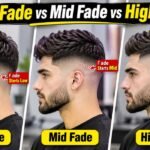
The gradient begins near the upper temple, close to where the skull curves, then sweeps down through the sideburn, around the ear, and into the neckline. That’s noticeably higher than a mid taper, which starts around the temple itself, or a low taper, which stays tucked close to the ear and neckline.
| Taper Height | Where It Starts | Best For |
| Low Taper | Just above the ear and neckline | Conservative settings, easiest upkeep |
| Mid Taper | Around the temple | Balanced look, suits most face shapes |
| High Taper | Upper temple, near the skull’s curve | Maximum contrast, style-forward looks |
Is a High Fade the Same Cut?
No. A high fade takes the entire side of the head down to a short, blended gradient with skin showing through most of it. A high blowout taper keeps the shortening concentrated in a band around the temple, ear, and neckline, leaving noticeably more length through the rest of the sides. Side by side, the two can look similar in photos, but the taper grows out with far less awkwardness and needs less aggressive upkeep between visits.
Read Related Post: High Taper Fade with Design: 28 Razor-Cut Styles to Show Your Barber
What Does a High Blowout Taper Look Like?

Picture skin-close or near-skin sides sweeping sharply into a full, lifted top. The top is usually left two to four inches long so it can be dried upward and outward into the classic blown-out shape. Some guys add a textured, slightly messy fringe at the front for a lived-in finish; others keep the top smooth and combed back for something cleaner and more polished. Either direction, the finished look reads as deliberate and sharp rather than accidental.
What Beard Pairs Best with a High Taper?
This cut pairs best with a well-defined beard — sharp stubble, a short boxed beard, or a completely clean shave. Because the sides are so tight, a patchy or undefined beard tends to draw attention to that contrast instead of balancing it out. A crisp neckline and cheek line on the beard keep the whole face and haircut looking like one cohesive style rather than two separate decisions.
Does a High Blowout Taper Suit All Hair Types?
Mostly, yes — but each texture needs a slightly different styling approach to get there, and getting it wrong is the single most common reason this cut disappoints people who love it on someone else:
- Straight hair: Needs texture cut into the top plus a real blow-dry routine, since straight hair falls flat fastest without help.
- Wavy hair: Holds lift naturally and needs only a small amount of product to shape the blowout.
- Curly hair: Works especially well with this style, since curls already carry natural volume; a diffuser attachment helps shape it without frizz.
- Afro-textured hair: Blends beautifully into this style — the tight sides let dense, curly top hair become the clear focal point.
- Fine or thinning hair: This is the riskiest hair type for the high version, since the strong side contrast pulls attention straight toward density on top. A low or mid taper is usually the safer, more flattering call here.
How Long Does Hair Need to Grow First?
Top hair should be at least two inches long before attempting a proper blowout — enough for a round brush and dryer to actually create lift rather than just move air around. Most guys grow out from a shorter cut over four to eight weeks to reach that length. If you’re not there yet, ask your barber for a shorter interim style and build the top up gradually before committing fully to the high version.
Does Your Face Shape Fit a High Taper?

Face shape changes how flattering this cut looks, sometimes significantly:
| Face Shape | High Taper Recommendation |
| Oval | Great fit — most variations work well |
| Round | Good fit — added height elongates the face |
| Square | Use caution — a softer, rounded top style balances strong angles |
| Long or Oblong | Better to skip the extra height; a low or mid taper with side width suits better |
| Heart-shaped | Works if top volume stays moderate rather than extreme |
Head shape matters here too. Because the sides are cut so close, any bumps or flat spots on the skull have nowhere to hide, so it’s worth mentioning your head shape to your barber before the first cut, especially if you’ve never gone this short on the sides before.
What Do You Tell Your Barber?
Barbers see dozens of vague requests a week, so precise language prevents a rushed or misread cut and saves you a second visit to fix it. Something close to this works well:
“High blowout taper — take the taper up to the upper temple, close to skin at the edges, and keep the top long with texture so I can blow it out.”
Bring a reference photo if you have one. Barbers interpret “high” differently from one shop to the next, and a picture removes most of the guesswork before the clippers ever touch your head.
Which Clipper Guard Should You Ask For?
The edges are usually taken down with a #0 or #1 guard, or bare blade for a true skin finish, then blended up into a #2 or #3 through the taper zone itself.
| Guard Number | Approx. Length | Used For |
| 0 | 1.6 mm | Skin or near-skin edge finish |
| 1 | 3.2 mm | Start of the blend |
| 2 | 6.4 mm | Mid-blend transition |
| 3 | 9.5 mm | Upper taper into the longer top |
What Should You Never Say to Your Barber?
Avoid vague instructions like “just take it high” or “surprise me” — that’s the fastest way to end up with sides shaved higher than you actually wanted, and there’s no undoing that until it grows back in. It also helps to avoid the word “fade” if what you actually want is the softer taper blend, since the two techniques use different tools and leave very different regrowth patterns behind.
How Do You Style a High Blowout Taper?
The haircut is only half the finished look — styling is what makes it actually work day to day:
- Wash and towel-dry hair until damp, not soaking wet.
- Apply a lightweight heat protectant or styling cream through the top section.
- Use a round brush and blow dryer on medium heat, lifting the roots upward and outward as you work through each section.
- Finish with a blast of cool air to help lock the shape in place before it has a chance to fall.
- Add a small amount of texture powder or matte paste for hold that doesn’t weigh the hair back down.
Which Product Matches Your Hair Type?
- Straight hair: Volumizing mousse or texture powder for lift at the root.
- Wavy hair: A light curl cream to define natural movement without stiffness.
- Curly or Afro-textured hair: A curl-enhancing cream paired with a diffuser attachment for shape without frizz.
- Fine hair: Lightweight, non-greasy sprays; skip heavy pomades, which tend to flatten volume instead of supporting it.
Does Humidity Affect the Style?
Yes, significantly. Humidity is one of the biggest threats to this cut, since moisture in the air can collapse the lift within a few hours of leaving the house. An anti-frizz or humidity-resistant spray applied before blow-drying helps the shape hold through a full day, especially in warm or damp climates.
What Mistakes Ruin a High Blowout Taper?

- Skipping the blow-dry step entirely and letting the top air-dry flat.
- Letting the sides creep higher than agreed without checking in with the barber mid-cut.
- Using too much heavy product, which weighs the top down instead of lifting it.
- Ignoring beard grooming, which leaves the whole look feeling unfinished.
- Waiting too long between appointments, letting the sharp contrast blur into a shapeless grow-out.
How Often Does a High Taper Need a Trim?
This is the highest-maintenance of the three heights by a clear margin. Expect a cleanup every 10 to 14 days to keep the skin-close edges sharp, with a full haircut every three to four weeks to reset the shape on top. The same contrast that makes the style striking also shows regrowth fastest, so skipping appointments undercuts the entire reason for choosing the high version over a low or mid one in the first place.
FAQ’s
What is the difference between a high blowout taper and a high fade?
A high fade takes the entire side of the head down to skin; a high blowout taper keeps more length through the sides and only tapers a narrower band around the temple and neckline.
Can a high blowout taper work on curly or Afro-textured hair?
Yes — curly and Afro-textured hair blend especially well, since the natural volume on top pairs naturally with the tight, close sides.
How long does hair need to be for a high blowout taper?
Top hair should be at least two inches long to hold a proper blow-dried shape.
How often do you need to get a high blowout taper trimmed?
Plan on a cleanup every 10 to 14 days, with a full haircut every 3 to 4 weeks.
Is a high blowout taper good for a round face?
Yes — the added height elongates a round face and draws the eye upward, creating a slimming effect.
What should you tell your barber to get a high blowout taper?
Ask for the taper to start at the upper temple, close to skin at the edges, with length and texture left on top for blow-drying.
Conclusion
The High Blowout Taper delivers the sharpest, most eye-catching version of the taper-and-blowout combination, but it asks for more in return: frequent trims, the right starting length on top, and an actual styling routine rather than an occasional one. Match the cut to your hair type and face shape, use precise language with your barber, and stay consistent with maintenance, and it becomes one of the most rewarding haircuts you can wear. Get any one of those pieces wrong, though, and it can look unfinished within days — so treat the cut and the styling as a single package, not two separate decisions.

Alex is a passionate hairstyle enthusiast and the creator of WowFades. He loves exploring modern haircuts, stylish hairstyles, and fresh fade trends, sharing practical inspiration to help readers discover new looks and feel confident about their personal style.








1 thought on “High Blowout Taper Haircut Guide: Low vs Mid vs High, Every Hair Type”