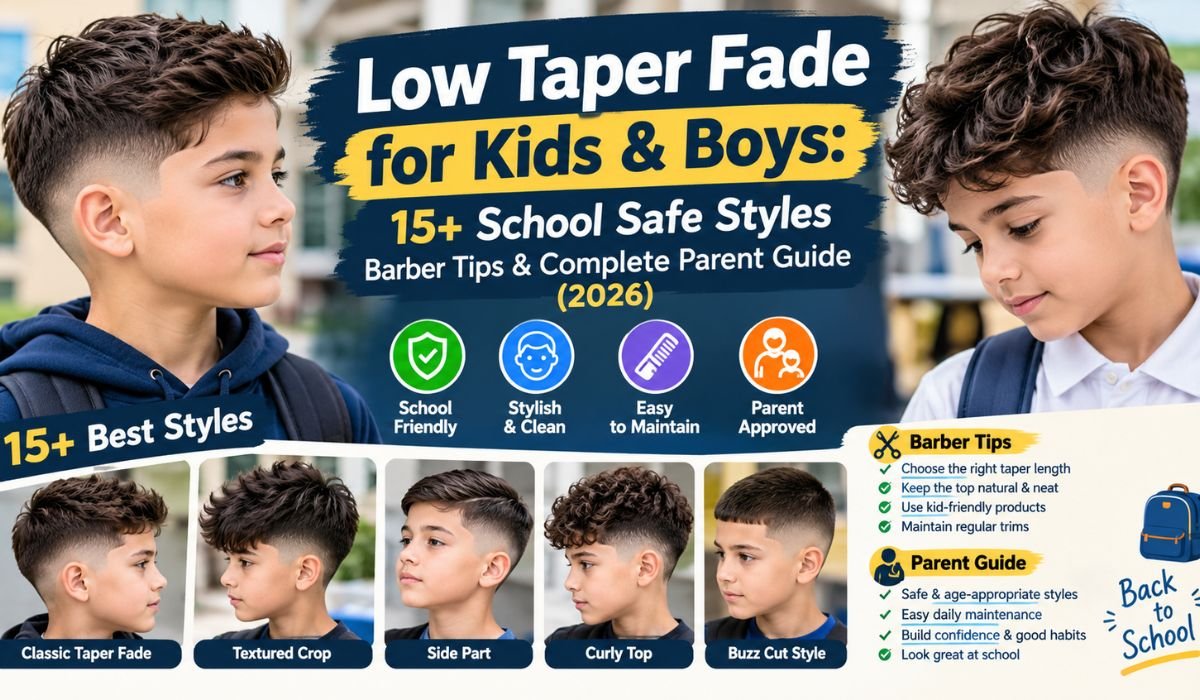
If you’ve been scrolling through barbershop photos or watching your son point at pictures on his phone, chances are he’s asking for one thing: a low taper fade for kids & boys. It’s the haircut every classroom seems to have at least five of right now, and for good reason — it’s neat, it grows out well, and most schools have no problem with it.
This guide breaks down everything a parent actually needs before booking that chair: what the cut is, which version fits your son’s hair type, age, and face shape, exactly what to say to the barber, and how to keep it looking sharp between visits. No filler — just what you need to make a confident decision.
What is a low taper fade for kids, and at what age can boys get one?
A low taper fade for kids & boys is a haircut where the hair gradually shortens starting just above the ears and around the neckline, while the top stays longer and fuller. Most barbers agree it works from around age 3 onward, once a child can sit still for 15–20 minutes, though many toddlers get softer versions even earlier.
What Is a Low Taper Fade for Kids & Boys?
At its core, a low taper fade for kids & boys is one of the gentlest fade styles a child can get. The blending starts low — near the ear and neckline — rather than higher up the head, which keeps the look soft, natural, and easy to grow out.
Unlike a full buzz cut, the top is left with enough length to style. That means one haircut can look completely different depending on how the top is worn: curly, spiked, combed over, or slicked back.
How Does a Low Taper Fade Actually Work?
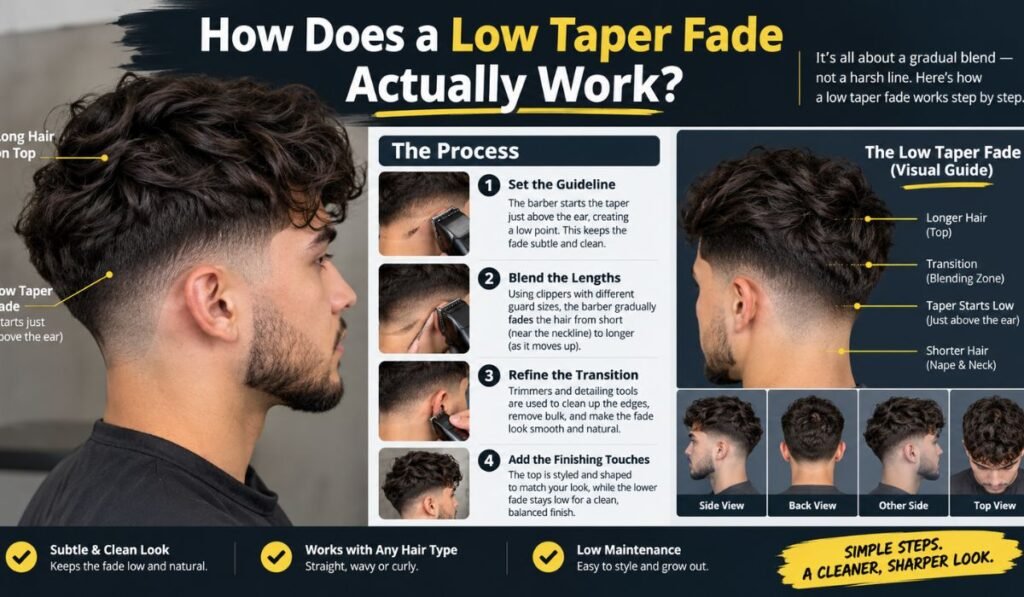
A barber uses clippers with graduated guards, starting with a longer guard near the crown and switching to shorter guards as they move down toward the ear and nape. The transition is gradual rather than abrupt, which is what gives the low taper fade for kids & boys its soft, blended look instead of a harsh line.
What Is the Difference Between a Taper and a Fade?
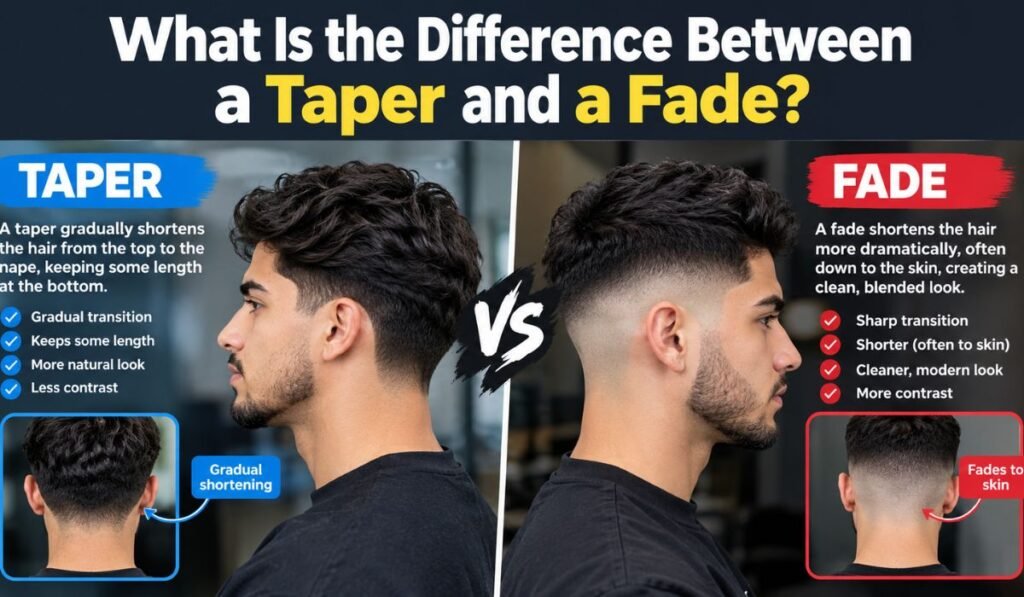
- Taper: Hair gradually gets shorter toward the neckline and sideburns but never reaches skin.
- Fade: Hair blends all the way down to skin at some point on the head.
- A low taper fade combines both — a smooth taper on top that transitions into a light fade near the bottom of the head, without ever looking too aggressive for school.
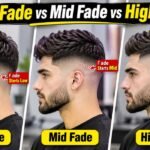
What Makes the Low Taper Fade Different from Mid and High Fades?
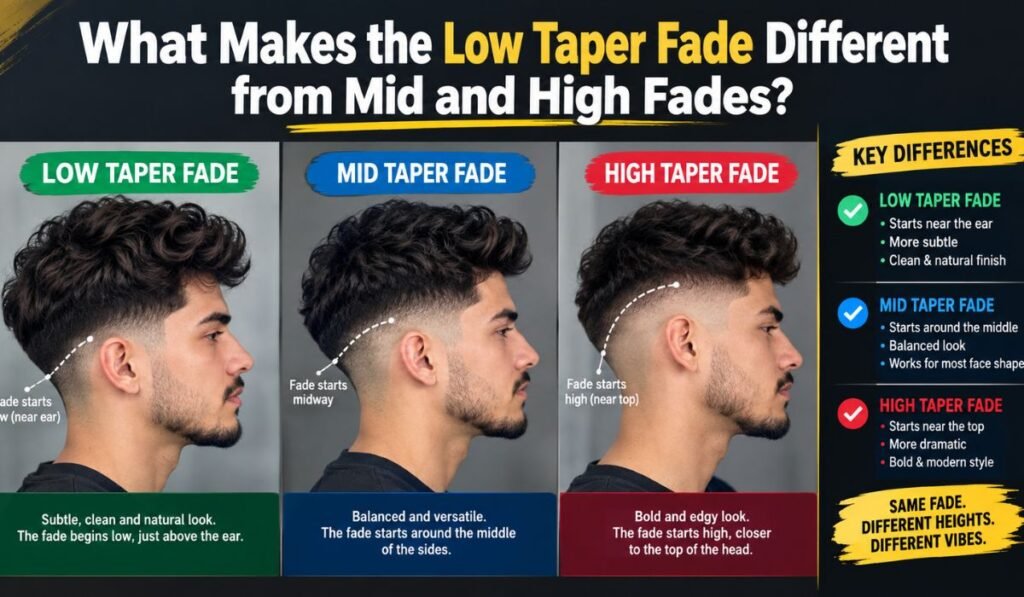
| Fade Type | Where It Starts | Best For | School-Friendly? |
| Low Taper Fade | Just above the ear/neckline | Everyday school wear, younger kids | Yes, almost always |
| Mid Fade | Roughly at temple level | Older kids who want more contrast | Usually, check dress code |
| High Fade | Above the temple, higher on the head | Teens wanting a bold look | Sometimes restricted |
The low taper fade for kids & boys sits at the mild end of the fade spectrum, which is exactly why it’s the safest starting point for most families.
Why Is the Low Taper Fade So Popular for Boys Right Now?
The TikTok Effect: How a Viral Meme Made Every Kid Want This Haircut
Around 2023, “low taper fade” turned into an internet joke used to poke fun at unoriginal, mainstream style choices. Ironically, the meme backfired — it made the haircut more famous than ever. Kids saw it on older siblings, YouTubers, and athletes, and started requesting it by name. That online buzz has carried straight into 2026, keeping the low taper fade for kids & boys at the top of every barbershop’s most-requested list.
Why Parents Love This Haircut Too
- Grows out evenly, so fewer emergency trims
- Keeps hair off the ears and neck in hot weather
- Works with nearly every hair type: straight, wavy, curly, or coily
- Easy for barbers to replicate consistently, visit after visit
- Meets nearly every school dress code without a second look
Read Related Post: 55 Best Low Taper Fade Haircuts for Men (2026 Complete Barber’s Guide)
What Are the Best Low Taper Fade Styles for Kids & Boys in 2026?
Save whichever style your son likes and show the photo to your barber — it removes all the guesswork.
1. Low Taper Fade with Textured Crop
Choppy, matte-finished layers on top. Works beautifully on straight-to-wavy hair and needs almost no daily styling.
2. Low Taper Fade with Curly Top
The fade stays tight and low while natural curls stay full and bouncy up top. A favorite for boys who want to keep their natural texture.
3. Low Taper Fade with Comb Over
A neat side part with the top combed to one direction. Slightly more formal — great for school portraits and family events.
4. Low Taper Fade with Pompadour
Volume built up and swept back. Best suited to thicker hair that can hold shape without heavy product.
5. Low Taper Fade with Buzz Cut
Even, short length across the top paired with the low fade. The lowest-maintenance option on this entire list.
6. Low Taper Fade with French Crop
A blunt, straight fringe on top paired with the fade below — a tidy, slightly European-inspired look.
7. Low Taper Fade with Mohawk / Faux Hawk
A strip of longer hair down the center. The faux hawk version is softer and easier to restyle for school mornings.
8. Low Taper Fade with Side Part
A classic, clean line shaved or combed into the top. Versatile enough for both casual days and dressier events.
9. Low Taper Fade with Afro Top (for Black Kids)
The sides fade low and clean while the natural afro texture stays full and rounded on top — a bold, low-maintenance combination.
10. Low Taper Fade with Broccoli Cut
Loose curls left slightly longer on top for a trendy, textured shape that’s especially popular with tweens.
11. Low Taper Fade with Crew Cut
Short, uniform length on top with the fade blending underneath — a timeless, tidy option that never looks dated.
12. Low Taper Fade with Slicked-Back Top
Top hair combed straight back with light pomade. A sharp, camera-ready choice for formal occasions.
13. Low Taper Fade with Spiky Top
Short layers styled upward with light gel or wax. A fun, energetic option many younger boys gravitate toward.
14. Low Taper Fade with Modern Mullet
Slightly longer at the back, faded at the sides. A trend-driven pick popular with older kids and teens.
15. Low Taper Fade with 360 Waves (for Black Boys)
Waves brushed into a spiral pattern on top, paired with a clean, low fade below — a sharp, structured look.
Which Low Taper Fade Works Best for Your Child’s Hair Type?
| Hair Type | Best Style Pairing | Styling Tip |
| Curly | Curly top or broccoli cut | Curl-defining cream after washing |
| Straight | French crop or side part | Light gel or serum for a smooth finish |
| Wavy | Textured crop or waves on top | Wave cream and regular brushing |
| Thick | Pompadour or slicked-back top | Texturizing shears to prevent bulk |
| Fine | Textured crop with light layers | Lightweight mousse for added volume |
| Afro/4C | Afro top or 360 waves | Leave-in conditioner to prevent dryness |
Low Taper Fade for Curly Hair Boys
The fade controls volume at the sides while the curls stay full and bouncy on top. Curl cream keeps things defined without weighing hair down.
Low Taper Fade for Straight Hair Boys
Clean sides add structure to otherwise flat-lying hair. A light pomade or matte paste on top finishes the look in seconds.
Low Taper Fade for Wavy Hair Boys
The natural wave pattern shows off beautifully on top while the fade keeps everything tidy underneath.
Low Taper Fade for Thick Hair Boys
Regular thinning with texturizing shears keeps thick hair from looking heavy, letting shapes like pompadours hold properly.
Low Taper Fade for Fine Hair Boys
Avoid cutting too short on top, since fine hair can look sparse. A little volumizing product goes a long way here.
Low Taper Fade for Black Kids (Afro / 4C Hair)
This cut works exceptionally well on afro and 4C hair. The fade stays low and clean while the top keeps its natural shape and volume.
What Is the Best Low Taper Fade for Each Age Group?
Baby Taper Fade: Is It Appropriate for Babies Under 2?
Most barbers recommend waiting until a child can sit reasonably still, generally after age 2. Before that, a soft trim at home is usually the safer, calmer option.
Toddler Taper Fade (Ages 2–5): What Works Best?
A higher guard and a softer fade line work best here, since younger kids move more in the chair and a gentler blend is more forgiving.
School-Age Boys Taper Fade (Ages 8–12): The Core Audience
This is where the low taper fade for kids & boys truly shines — school-safe, low-maintenance, and flexible enough to match any personality.
Teen Taper Fade (Ages 13–17): Style-Driven Choices
Teens tend to lean into more expressive top styles — mullets, pompadours, and mohawks — while keeping the fade itself low and manageable.
Quick Age Reference Guide
| Age Range | Recommended Approach |
| Under 2 | Soft trim at home, avoid clippers near skin |
| 2–5 | Higher guard, gentle low fade |
| 6–12 | Classic low taper fade, any top style |
| 13–17 | Low fade with trend-driven top styles |
Which Low Taper Fade Suits Your Child’s Face Shape?
Low Taper Fade for Round Faces
Added height on top — think spiky or pompadour styles — helps elongate a round face.
Low Taper Fade for Oval Faces
Oval is the most versatile shape. Comb-overs and textured crops both look great.
Low Taper Fade for Square Faces
Softer, textured tops help balance a strong jawline without adding too much width.
Low Taper Fade for Heart-Shaped Faces
Fuller top styles, like a curly or textured crop, help balance a narrower chin.
How Do You Tell the Barber What Low Taper Fade You Want?
The Complete Parents’ Barber Scripts
Getting the low taper fade for kids & boys right at the barbershop comes down to clear, specific language:
- “Low taper fade, keep it above the ears, don’t go too high on the sides.”
- “Leave the top at [X] inches, fade should blend low, near the hairline.”
- “Nothing shaved into the sides, just a clean, soft fade.”
Essential Questions to Ask the Barber Before the Cut
- How far up will the fade start?
- What guard number will you use on top?
- Can we keep it soft enough to grow out evenly?
What NOT to Say at the Barbershop
Avoid vague phrases like “just make it cool” or “whatever’s trendy” — a bad blend is hard to fix quickly, so specifics matter far more than trust alone.
How Do You Maintain a Low Taper Fade for Kids at Home?
The Complete Weekly Home Maintenance Routine
- Wash 2–3 times a week with a gentle kids’ shampoo
- Comb or brush daily to keep the top’s shape
- Apply a small amount of product only on styled days
- Trim any stray neckline hairs with clippers every 1–2 weeks
How to Do a Quick At-Home Touch-Up Between Barber Visits
A cordless trimmer with a guard can clean up the neckline and around the ears between full appointments, keeping the fade looking fresh for longer.
How to Keep Curly Hair Looking Fresh Between Trims
Use a leave-in conditioner and a wide-tooth comb after washing to prevent frizz and keep curls defined.
Signs It Is Time for a Barber Visit
- The fade line has grown out and blurred
- Top hair is falling into the eyes
- Neckline hair looks noticeably uneven
How Much Does a Kid’s Low Taper Fade Haircut Cost?
Kids Taper Fade Price Breakdown
| Location Type | Typical Price Range |
| Chain salon (kid-focused) | 15–25 |
| Local barbershop | 20–35 |
| Premium/city barbershop | 35–50+ |
Smart Ways to Save Money on Kids’ Taper Fades
- Book monthly instead of every two weeks — a low fade grows out slowly
- Ask about kids’ or sibling discounts
- Learn basic at-home touch-ups to stretch time between visits
Is a Low Taper Fade Haircut School-Appropriate for Boys?
What Most School Dress Codes Say About Fade Haircuts
Most schools focus on avoiding shaved-in designs, extreme lengths, or unnatural colors rather than fades themselves. A low taper fade for kids & boys rarely raises any concern.
The Safest Low Taper Fade Choices for Strict Schools
- Low taper fade with crew cut
- Low taper fade with textured crop
- Low taper fade with side part
School-Safe Fade Checklist for Parents
- No shaved lines or designs
- No skin showing above the ear
- Natural hair color only
- Top length within school policy limits
How Do You Prepare Your Child for Their First Taper Fade Haircut?
Step-by-Step First Barbershop Visit Preparation
- Show your child photos of the style beforehand so it feels familiar
- Pick a barber experienced with kids
- Bring a favorite toy, tablet, or snack for distraction
- Book during a quiet, non-rushed time slot
- Let them know clippers may feel ticklish but won’t hurt
Low Taper Fade for Kids with Sensory Sensitivity
Ask the barber to use a quieter clipper, allow breaks, and explain each step before starting. Some shops now offer sensory-friendly appointment times specifically for this.
What Are the Best Styling Products for a Kids’ Low Taper Fade?
Product Recommendations by Hair Type
| Hair Type | Recommended Product |
| Curly | Curl-defining cream |
| Straight | Light gel or serum |
| Wavy | Wave cream |
| Thick | Matte clay |
| Fine | Lightweight mousse |
Products to Always Avoid for Kids’ Hair
- Adult-strength gels with alcohol
- Heavy waxes that clog young scalps
- Any product not labeled safe for children
What Are the Best Father-Son Matching Low Taper Fade Ideas?
A matching low taper fade for kids & boys with dad is a simple way to make haircut day feel special. Popular pairings include matching textured crops, matching side parts, or a dad’s high fade paired with a son’s softer low fade — same style, adjusted for age.
What Is the Best Low Taper Fade for Each Season?
- Summer: Shorter top, low taper fade with buzz cut or crew cut to beat the heat
- Winter: Medium-length top for extra warmth under hats
- Spring/Fall: Textured crop or comb-over — versatile for changing weather
- Holidays/Photos: Slicked-back or side part for a polished, camera-ready finish
FAQ’s
What age is appropriate for a kid’s low taper fade?
Most barbers recommend starting around age 3, once a child can sit still through the haircut.
How long does a kid’s taper fade last before needing a trim?
Typically 3–4 weeks, since low fades grow out slowly and evenly.
Does a low taper fade work for all hair types?
Yes — it works well on straight, wavy, curly, coily, and 4C hair with only minor styling adjustments.
Is a low taper fade allowed in schools?
Almost always, since it avoids shaved designs, extreme lengths, and skin-high fades that stricter dress codes flag.
What is the difference between a low taper fade and a skin fade for kids?
A low taper fade blends gradually without necessarily reaching bare skin, while a skin fade goes all the way down to the scalp.
How do I ask the barber for a low taper fade for my son?
Say “low taper fade, keep it above the ears” and bring a reference photo for the exact top style you want.
Can I do a low taper fade at home on my child?
Basic touch-ups are doable with clippers and guards, but the initial blend is best left to a professional barber.
What styling products should I use on my child’s taper fade?
Choose lightweight, kid-safe products matched to hair type — gel for straight hair, curl cream for curls, and mousse for fine hair.
How much does a kids’ taper fade cost in the United States?
Prices typically range from $15 to $50, depending on the salon type and location.
What is the best low taper fade for Black kids?
The low taper fade with afro top or 360 waves are both excellent choices that highlight natural texture while staying school-safe.
Conclusion
The low taper fade for kids & boys has earned its spot as the most requested kids’ haircut of 2026 for good reason — it’s school-safe, works with any hair type, and grows out cleanly between visits. Whether your son wants curls on top, a sharp side part, or a bold afro fade, there’s a version of this cut that fits his age, hair texture, and face shape perfectly. Bring a reference photo, use a clear barber script, and you’ll walk out of that chair with a haircut that lasts and a kid who feels confident wearing it.

Alex is a passionate hairstyle enthusiast and the creator of WowFades. He loves exploring modern haircuts, stylish hairstyles, and fresh fade trends, sharing practical inspiration to help readers discover new looks and feel confident about their personal style.









1 thought on “Low Taper Fade for Kids & Boys: 15+ School-Safe Styles, Barber Tips & Complete Parent Guide (2026)”