Choosing the right haircut can make or break your entire look, and few styles offer as much versatility as the taper fade. If you’ve been scrolling through barbershop inspiration boards feeling overwhelmed by the options, you’re not alone. Understanding the different types of taper fade is the first step toward walking into your next barber appointment with confidence instead of confusion.
This guide breaks down every major variation — from subtle low fades to bold skin fades — so you know exactly what to ask for and why it works for your hair, face shape, and lifestyle.
What Are the Main Types of Taper Fade?
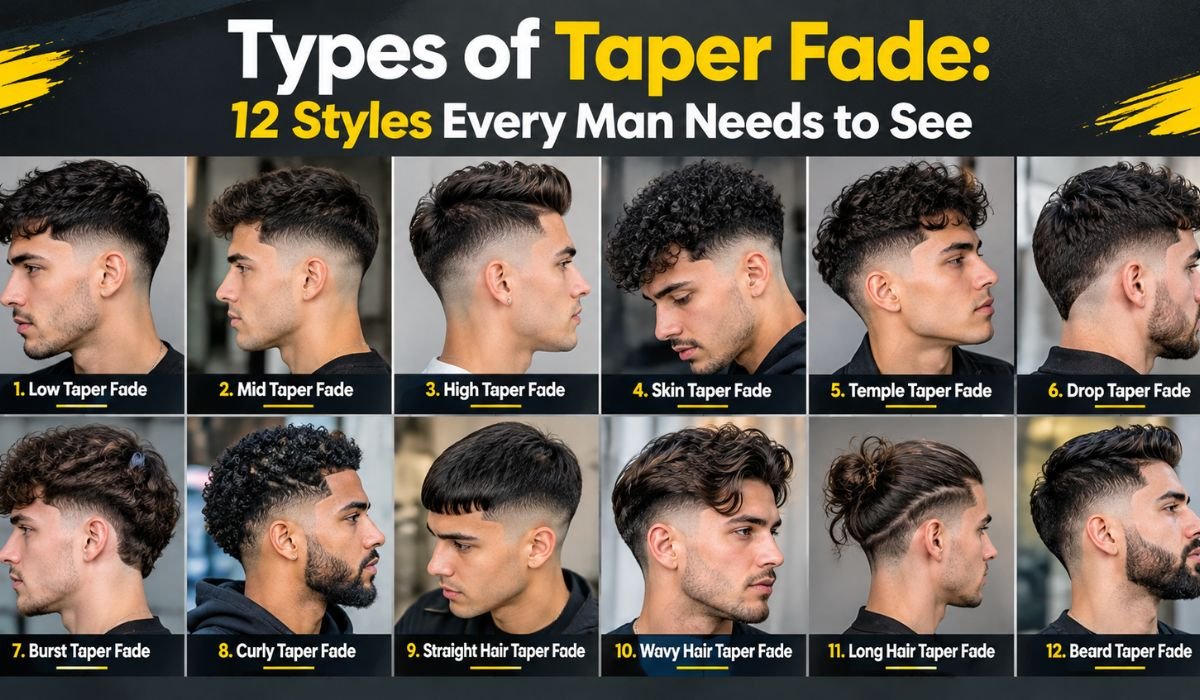
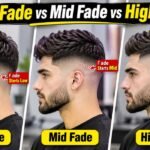
At a glance, the types of taper fade fall into three core categories based on where the fade starts: low, mid, and high. From there, barbers layer on techniques like skin fades, burst fades, drop fades, and shadow fades to create even more customized results. Add hair texture into the mix — curly, straight, afro, or Asian hair — and you get dozens of possible combinations, all rooted in the same foundational styles.
What Are the Main Types of Taper Fade?
To put it simply, every fade you see on Instagram or in the barber’s chair is a variation of one of these fundamentals:
- Low, mid, or high starting point on the head
- Skin, shadow, or textured finish
- Straight, burst, or drop shaping around the ear and neckline
Once you understand these building blocks, every style on this list will make sense instantly.
Quick Navigation: Types of Taper Fade at a Glance
| Style | Fade Starts | Best For | Maintenance |
| Low Taper Fade | Above the ears | Professional settings | Every 3–4 weeks |
| Mid Taper Fade | Temple area | Everyday versatility | Every 2–3 weeks |
| High Taper Fade | Above the temples | Bold, statement looks | Every 2 weeks |
| Skin/Bald Fade | Varies (down to skin) | Sharp, dramatic contrast | Every 1–2 weeks |
| Burst Fade | Around the ear | Curved, ear-framing styles | Every 2 weeks |
| Drop Fade | Curves behind the ear | Curly or voluminous tops | Every 2–3 weeks |
| Shadow Fade | Varies (soft blend) | Subtle, low-contrast looks | Every 3–4 weeks |
| Temple Fade | Sides only | Edgy, undercut-adjacent looks | Every 2 weeks |
What Is a Taper Fade?
A taper fade is a haircut technique where hair gradually shortens from longer lengths on top to shorter lengths on the sides and back, eventually blending into the skin or near-skin length. The result is a seamless transition with no harsh lines — just a smooth gradient from long to short.
Barbers achieve this using clippers with varying guard sizes, carefully blending each length into the next. That’s what separates a great fade from a sloppy one: the blend has to be invisible.
Taper vs. Fade: What’s the Difference?
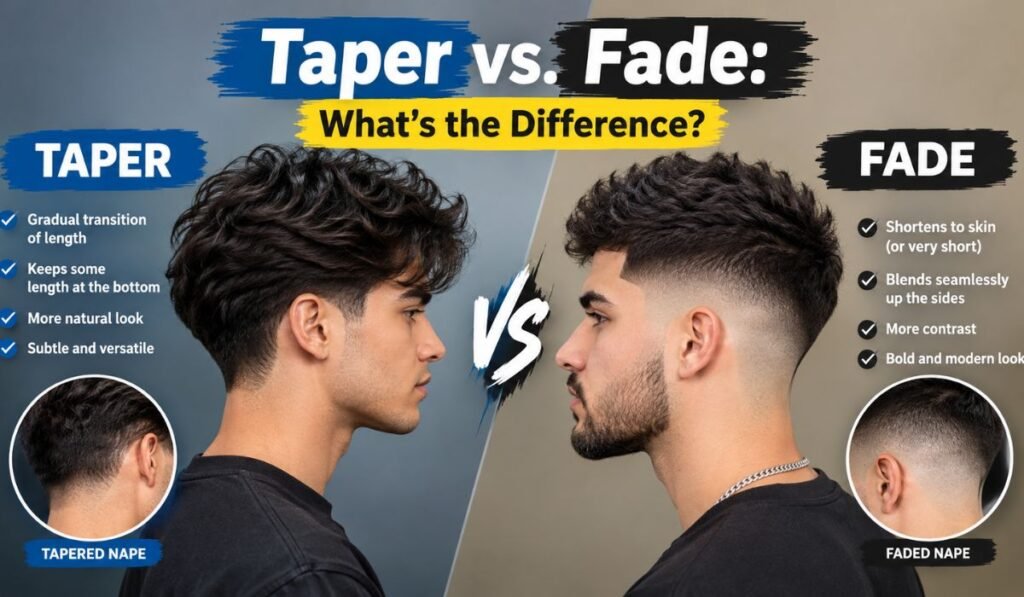
People often use “taper” and “fade” interchangeably, but they’re technically different:
- A taper keeps some length throughout, tapering hair gradually without ever reaching the skin.
- A fade cuts hair down to skin level (or very close to it) at some point on the head.
- A taper fade combines both — tapering through the mid-lengths and fading to skin near the hairline or neckline.
Knowing this distinction is key when discussing the various types of taper fade with your barber, since it directly affects how dramatic or subtle your final look will be.
Read Related Post: Low Taper Fade for Kids & Boys: 15+ School-Safe Styles, Barber Tips & Complete Parent Guide (2026)
The 3 Foundation Types of Taper Fade

Nearly every fade haircut you’ll come across is built on one of these three foundations. These are the types of taper fade every barber learns first, and they’re the easiest starting point if you’re new to the style.
Low Taper Fade
The low taper fade begins just above the ears and fades down toward the neckline, keeping most of the sides relatively fuller. It’s the most subtle of the types of taper fade, making it a favorite for:
- Corporate and professional environments
- Men who prefer a conservative, clean-cut appearance
- First-timers easing into the fade world
Because the fade sits low, it grows out more gracefully than higher variations, meaning you can stretch time between barber visits without the style looking messy.
Mid Taper Fade
The mid taper fade starts around the temple, roughly halfway up the side of the head. It strikes a balance between subtle and bold — offering more visible contrast than a low fade without the dramatic statement of a high fade.
This is arguably the most popular of all the types of taper fade because it pairs well with almost any top style, including quiffs, pompadours, textured crops, and slick-backs. It’s the safe-but-stylish middle ground most barbers recommend to first-time fade clients.
High Taper Fade
The high taper fade begins above the temples, sometimes close to the crown, creating maximum contrast between the top and sides. This is the boldest of the three foundational types of taper fade and works best for men who want their haircut to make a statement.
High fades draw attention upward, emphasizing whatever you’re doing with the hair on top — whether that’s a textured crop, a pompadour, or a slicked style. It requires more frequent trims to maintain the sharp line, typically every two weeks.
Advanced Technique Variants: Beyond Basic Height
Once you’ve picked your starting height, barbers can layer on specialized techniques. These advanced types of taper fade add texture, shape, and personality beyond a simple length gradient.
Skin Fade / Bald Fade Taper
A skin fade (also called a bald fade) takes the fade all the way down to bare skin at some point on the head, creating the most dramatic contrast possible. It can be combined with a low, mid, or high starting point, making it one of the most customizable types of taper fade available.
Skin fades require the most upkeep — expect to visit the barber every one to two weeks to keep the clean line looking sharp.
Burst Taper Fade
The burst fade curves around the ear in a semicircle rather than running in a straight line down the side of the head. This creates a rounded, “bursting” effect that works exceptionally well with:
- Mohawks
- Curly or voluminous tops
- Longer hair that needs to be framed rather than cut straight across
It’s a favorite among men with curly or coily hair textures because the curved shape complements natural volume.
Drop Fade Taper
A drop fade follows a similar concept to the burst fade but continues its curve further back behind the ear, “dropping” down toward the nape of the neck. This creates extra room on top and works beautifully with curly and thick hair types, since it prevents the sides from looking flat against a fuller top.
Shadow Taper Fade
The shadow fade is the most subtle of the advanced techniques. Instead of fading all the way to skin, it uses clipper guards to leave a light “shadow” of hair, creating a soft, low-contrast gradient. This is ideal for:
- Men who want a fade without the high-maintenance skin-fade upkeep
- Older hairlines or thinning hair where a hard line looks unflattering
- Anyone wanting a more natural, understated finish
Temple Fade (Brooklyn Fade)
Also known as the Brooklyn fade, the temple fade focuses the fading action specifically around the temples while leaving the rest of the sides longer. It’s often paired with an undercut and has become especially popular for framing curly or textured hairstyles without shortening the entire side.
Taper Fade Styles by Hair Type & Texture
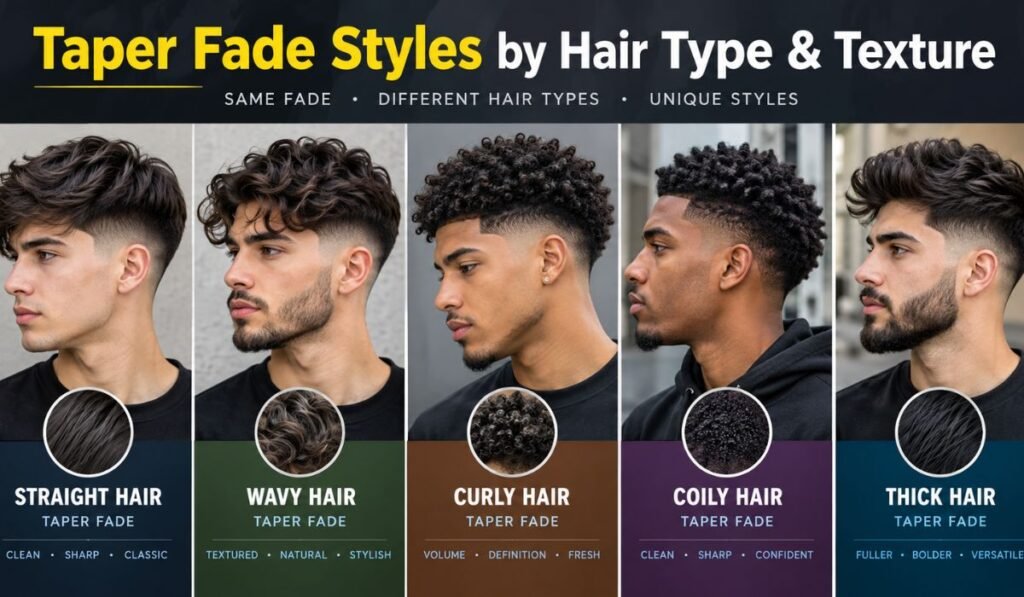
Hair texture significantly changes how each of these types of taper fade looks and behaves. Here’s how to match the right fade to your natural texture.
Taper Fade for Curly Hair
Curly hair pairs beautifully with burst fades and drop fades, since the curved shaping complements natural curl volume instead of fighting against it. A mid or low starting point also works well, giving curls room to breathe on top while keeping the sides controlled.
Tip: Ask your barber to leave slightly more length on top to preserve curl definition and avoid a “shrunken” look after drying.
Taper Fade for Straight Hair
Straight hair shows off clean lines exceptionally well, making it ideal for classic low, mid, and high taper fades with sharp, crisp blends. Skin fades also look especially clean on straight hair because there’s no natural texture to disrupt the fade line.
Taper Fade for Afro Hair
Afro-textured hair works wonderfully with high taper fades and skin fades, which create striking contrast against dense, voluminous tops. Burst and drop fades are also popular choices, as they help frame rounder or fuller hair shapes at the crown.
Taper Fade for Asian Hair
Asian hair, which tends to be straight and thick, holds fade lines crisply and pairs well with mid and low taper fades combined with textured or two-block styles on top. A shadow fade is also a great option for thicker hair that naturally minimizes visible skin at the fade line.
FAQ’s
1. What are the 3 main types of taper fade?
The three foundational types of taper fade are low, mid, and high — categorized by where the fade begins on the head.
2. Which taper fade is best for beginners?
A low taper fade is the easiest starting point since it’s subtle, professional, and forgiving as it grows out.
3. How often do you need to cut a taper fade?
Most fades need a trim every two to three weeks, though skin and high fades may need touch-ups closer to every one to two weeks.
4. What’s the difference between a taper and a taper fade?
A taper keeps hair length throughout, while a taper fade blends down to skin or near-skin at some point on the head.
5. Can you get a taper fade with curly hair?
Yes — curly hair works especially well with burst and drop fades, which curve around the ear to frame natural volume.
6. What face shape suits a high taper fade?
High taper fades suit oval, square, and round face shapes best, since the added height balances facial proportions.
7. Is a taper fade professional enough for work?
Yes, particularly low and mid taper fades, which offer a clean, polished look suitable for corporate environments.
8. What should I tell my barber for a taper fade?
Specify the starting height (low, mid, or high), whether you want a skin or shadow finish, and how much length to keep on top.
9. How do you maintain a taper fade at home?
Use lightweight styling products, avoid over-washing, and book regular trims every two to three weeks to keep the fade sharp.
10. Does hair type matter for taper fades?
Yes — curly and afro-textured hair often suit burst or drop fades, while straight hair holds crisp, classic fade lines more easily.
Conclusion
With so many types of taper fade to choose from, there’s genuinely a style for every face shape, hair texture, and lifestyle. Whether you’re drawn to the subtle sophistication of a low taper fade, the bold statement of a high skin fade, or a curl-friendly burst fade, the key is communicating clearly with your barber about height, finish, and maintenance expectations. Start with the foundation that matches your comfort level, and don’t be afraid to experiment as you get more familiar with what works for your hair.

Alex is a passionate hairstyle enthusiast and the creator of WowFades. He loves exploring modern haircuts, stylish hairstyles, and fresh fade trends, sharing practical inspiration to help readers discover new looks and feel confident about their personal style.







1 thought on “Types of Taper Fade: 12 Styles Every Man Needs to See”