The Drop Fade Haircut is a modern men’s hairstyle known for its curved fade line that drops behind the ears toward the neckline. Unlike a traditional fade that follows a relatively straight path around the head, this haircut creates a natural arc that follows the shape of the head. The result is a cleaner side profile, a more defined rear outline, and a balanced appearance from different angles.
One reason the drop fade has become popular is its versatility. It works with textured crops, curly tops, short fringes, wavy quiffs, pompadours, and even modern mullets. You can also customize it with a low, mid, or high starting point and choose between a skin, zero, or shadow finish.
However, choosing the right version involves more than showing your barber a picture. You should consider your hair texture, density, head shape, preferred top length, and how frequently you want to visit the barbershop.
This guide explains the different fade variations, compares popular styles, explores the back shape, and provides a simple barber script to help you get the exact finish you want.
Drop fade haircut gallery: side paths and rear contours
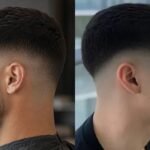
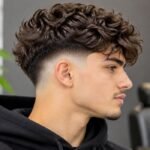
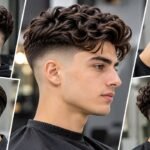
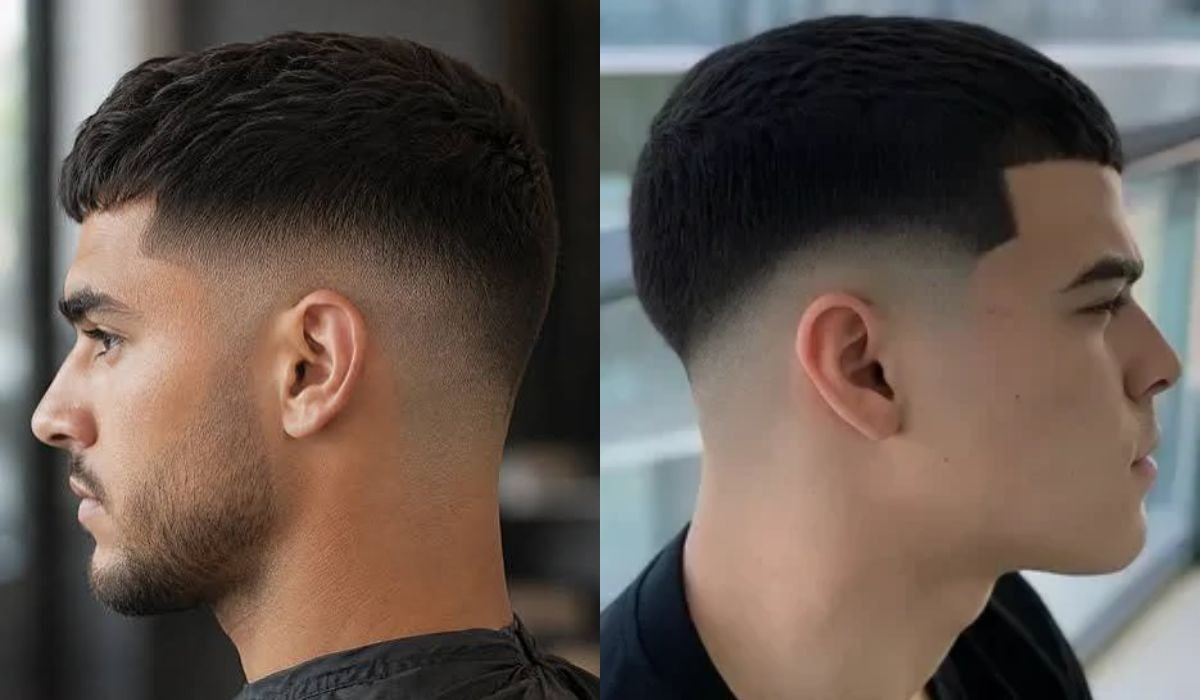
A Drop Fade Haircut is best understood by looking at its side and back views. The curved transition is most noticeable behind the ear, where the fade gradually moves downward toward the nape.
From the side, the haircut creates a smooth connection between the longer hair on top and the shorter hair around the lower sides. From the rear, the curved outline follows the natural shape of the head rather than creating a straight horizontal fade.
When exploring haircut photos, pay attention to these details:
- Side profile: Check where the fade begins and how smoothly it blends into the top.
- Behind the ear: Look for a natural downward curve instead of a rounded semicircle.
- Back view: Notice how the fade follows the occipital area and moves toward the neckline.
- Nape finish: Decide whether you prefer a clean skin finish or a softer, shadowed appearance.
- Top connection: Check whether the upper hair blends naturally into the faded sides.
A useful reference gallery should include at least three angles: front-side, full side, and rear view. These photographs help your barber understand the complete haircut instead of guessing how you want the back shaped.
What Makes a Fade a “Drop”?
The word drop describes the direction of the fade line. Instead of maintaining the same height around the entire head, the transition gradually curves downward behind each ear.
This curved placement creates a distinctive silhouette and preserves more hair above the lower rear section. It also helps the haircut follow the natural contours of the head.
A traditional fade usually creates a more level transition around the sides and back. A drop fade changes that outline by lowering the blend behind the ears.
The most important thing to understand is that the drop describes the shape, not the length.
For example, you can request a low drop fade, mid drop fade, or high drop fade. Each option has a different starting height, but all maintain the characteristic downward curve.
Compare your preferences first
Before selecting a particular version, consider what you want your haircut to achieve.
| Your preference | Recommended direction |
| Natural and subtle appearance | Low drop |
| Balanced contrast | Mid drop |
| Bold and noticeable sides | High drop |
| Maximum contrast | Skin finish |
| Softer, darker appearance | Shadow finish |
| More length on top | Textured or wavy style |
| Defined rear outline | Carefully shaped nape |
Also consider how much styling time you have each morning. A short textured crop requires less styling than a pompadour or longer quiff.
Read Related Post: Low Burst Fade: 5 Styles & What to Tell Your Barber
Drop Fade vs Standard Fade vs Burst Fade
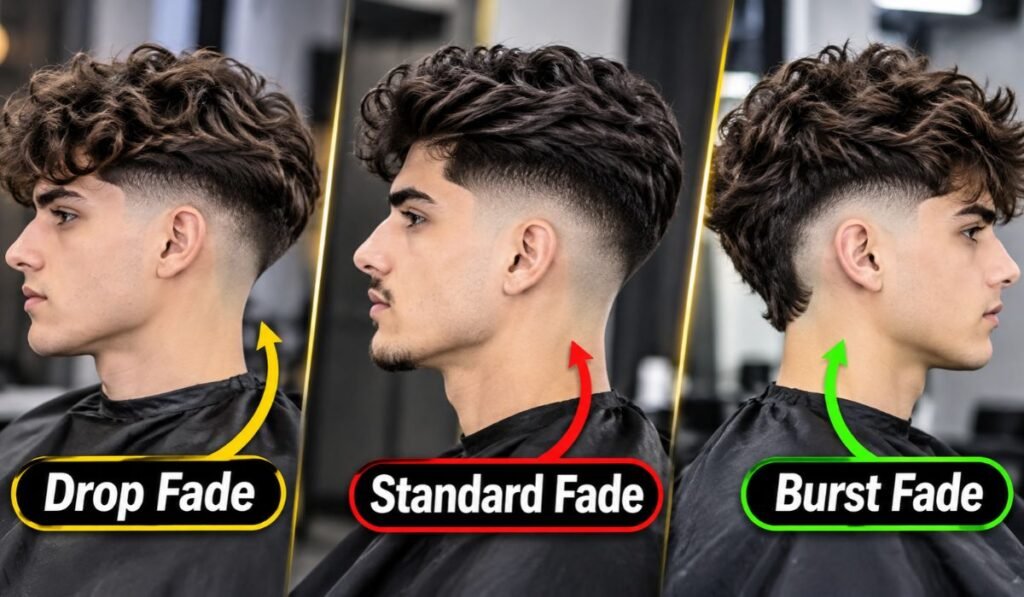
These three haircuts can look similar from certain angles, but their outlines are different. Understanding the differences helps you select a style that matches your preferred side and back profile.
The main difference is how the fade moves around the ear and rear of the head.
| Feature | Drop fade | Standard fade | Burst fade |
| Fade shape | Curves downward | Usually follows a level path | Forms a semicircle |
| Behind the ear | Drops toward the nape | Continues at a similar height | Curves around the ear |
| Back section | Gradually faded | Faded at a relatively even height | Often left longer |
| Overall appearance | Balanced and shaped | Clean and traditional | Bold and distinctive |
| Popular combinations | Crop, curls, quiff | Crew cut, slick back | Mohawk, mullet, faux hawk |
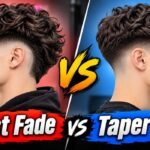
Drop fade vs standard fade: A standard fade creates a more uniform transition around the head. A drop fade follows the rear contour, creating a noticeable downward curve. Choose the standard version if you prefer an even outline, or the dropped shape if you want more definition behind the ears.
Drop fade vs burst fade: A burst fade curves around the ear in a semicircular pattern and usually leaves more length toward the back. A drop fade continues its downward movement toward the nape. The burst is particularly popular with mohawks and mullets, while the dropped shape works with a wider range of traditional and modern tops.
Neither option is universally better. Your preferred back shape and hairstyle should determine the choice.
Low, Mid or High Drop Fade?
Fade height determines how far upward the shorter section extends along the sides. The three common options offer different levels of contrast and suit different haircut preferences.
Low drop fade
A low drop fade starts close to the ears and curves downward toward the neckline. It preserves more length around the upper sides and creates a subtle transition.
This option is suitable for people who want a neat haircut without exposing too much scalp. It also works well with textured crops, short fringes, crew cuts, and natural curls.
Best features:
- Softer contrast around the sides.
- More natural-looking silhouette.
- Suitable for professional environments.
- Easier to maintain between appointments.
Mid drop fade
A mid drop fade starts around the middle of the sides, generally near the temple area, before following the downward curve behind the ear.
It offers a balance between a subtle low fade and a more dramatic high fade. The contrast is noticeable without removing too much weight from the upper sides.
This version pairs especially well with textured fringes, curly tops, quiffs, and short pompadours.
Best features:
- Balanced side profile.
- Clearly visible curved outline.
- Works with many top hairstyles.
- Suitable for everyday and modern looks.
High drop fade
A high drop fade begins higher on the sides, creating a stronger contrast between the top and lower sections.
It exposes more of the sides and makes the upper hairstyle stand out. This is a good option for people who prefer bold, modern haircuts.
It pairs particularly well with curly tops, textured crops, faux hawks, and pompadours.
Best features:
- Strong contrast.
- More noticeable side definition.
- Highlights volume on top.
- Creates a sharper overall appearance.
Remember that fade height is not a fixed measurement. Barbers may position the transition differently depending on head shape and hair growth patterns.
Shadow, Zero or Skin Drop Fade?
The finish determines how short the hair becomes at the bottom of the fade. It is separate from the height and shape, meaning you can combine a low, mid, or high drop with different finishes.
| Finish | Bottom appearance | Overall effect |
| Shadow fade | Short visible hair | Soft and natural |
| Zero fade | Very close clipper cut | Clean and defined |
| Skin fade | Bare-looking skin | Maximum contrast |
Shadow finish
A shadow drop fade keeps a small amount of hair at the bottom. Instead of exposing the scalp, the barber creates a darker, softer transition.
It is ideal for people who prefer a natural appearance and want the haircut to grow out less dramatically.
Zero finish
A zero drop fade uses an unguarded clipper blade or zero setting at the shortest section. It creates a close finish while usually leaving slight visible stubble.
This option provides more definition than a shadow finish without necessarily going completely down to bare skin.
Skin finish
A skin drop fade takes the lowest section down to bare-looking skin, usually with a foil shaver or razor where appropriate.
It creates the strongest contrast and makes the curved fade line more noticeable. However, regrowth becomes visible sooner, so regular maintenance is important.
Drop Fade Haircut Styles for Different Tops
One of the biggest advantages of a Drop Fade Haircut is that it can be combined with many hairstyles. The faded sides create a clean foundation while the top determines the overall personality of the cut.
Textured Crop, Fringe or Crew Cut
A textured crop is a practical combination for people who prefer short, manageable hair. The top is cut with different lengths to create movement, while the sides follow the curved fade.
A fringe adds another dimension by allowing the front hair to fall toward the forehead. You can choose a straight, messy, or slightly angled fringe depending on your preference.
A crew cut is a simpler alternative. It keeps the top relatively short and creates a clean, balanced appearance.
These styles work particularly well for people who do not want to spend much time styling their hair.
Styling tips:
- Use matte clay for a textured finish.
- Keep the fringe slightly uneven for natural movement.
- Avoid excessive product on short hair.
- Ask your barber to blend the top without removing too much length.
Curly or Coily Top
Natural curls and coils create excellent contrast with faded sides. The top retains its natural volume while the lower sections become shorter and cleaner.
A curly top with a drop fade is particularly useful when you want to maintain your natural texture without allowing the sides to become too bulky.
For tighter coils, your barber should consider the direction of hair growth and how much volume you want to preserve.
Styling tips:
- Use a lightweight curl cream.
- Apply a moisturizing product to reduce dryness.
- Avoid brushing dry curls excessively.
- Keep the upper shape balanced with the sides.
A low or mid version usually offers a softer result, while a high version creates stronger contrast.
Wavy Quiff or Longer Top
Wavy hair provides natural movement and volume, making it a good match for a quiff or longer textured top.
A quiff pushes the front hair upward and slightly backward. This creates height without requiring the entire top to be slicked back.
For a more relaxed appearance, leave the waves loose and use a light styling cream.
The Drop Fade Haircut keeps the sides controlled while allowing the longer upper section to remain the main feature.
Styling tips:
- Use a blow dryer on low or medium heat.
- Apply a small amount of lightweight styling cream.
- Direct the front hair upward for a quiff.
- Keep the natural wave pattern visible.
Pompadour, Faux Hawk or Mullet
If you prefer a more distinctive hairstyle, consider combining the fade with a pompadour, faux hawk, or mullet.
A pompadour features volume at the front and gradually moves backward. It looks especially balanced when the sides are cleanly blended.
A faux hawk creates a central strip of longer hair that is styled upward. The contrast between the top and sides makes the hairstyle more noticeable.
A mullet keeps additional length toward the back. When combining it with a dropped fade, discuss the rear length carefully so the barber does not remove more hair than you want.
Each style has a different silhouette, so bring a reference photo that clearly shows the top and back.
How Texture and Density Change the Drop
Hair texture and density influence how a fade looks after cutting. Two people can request the same haircut and receive different-looking results because their natural hair characteristics are different.
Straight hair: Straight hair often reveals the blending details clearly. A skilled barber should use smooth transitions to avoid visible steps between clipper lengths.
Wavy hair: Waves create natural movement and volume. A medium-height fade can balance the sides without making the top look disconnected.
Curly hair: Curls provide additional volume and texture. Keeping enough length on top creates a balanced contrast with the shorter sides.
Coily hair: Coily hair can create a strong visual difference between the top and faded sections. Careful blending and a suitable top shape help maintain a natural appearance.
Hair density also matters:
- Thick hair may require additional weight removal around the upper sides.
- Fine hair often benefits from a softer transition that preserves visual fullness.
- Dense curls may need careful shaping to prevent the top from looking too wide.
- Uneven growth patterns should be considered before establishing the fade guideline.
Your barber should evaluate your natural growth pattern instead of copying every detail from a reference photograph.
Rear Shape, Nape and Beard Connection
The back of the haircut is an important part of the overall result. Even when the side fade looks excellent, an uneven rear outline can make the haircut appear unfinished.
The curved section should flow naturally behind the ears and connect smoothly with the lower neckline.
There are three details worth discussing before your barber starts cutting.
1. Rear contour
Decide how low you want the fade to drop behind the ears. A subtle curve keeps more weight around the back, while a stronger curve creates a more noticeable outline.
2. Nape finish
You can choose a natural neckline, tapered nape, or a cleaner squared finish, depending on your preferred appearance. The barber should make sure the neckline complements the curve rather than creating an unrelated shape.
3. Beard connection
If you have facial hair, ask for a smooth transition between the sideburns and beard. A gradual blend creates a more connected appearance, while a defined separation gives a sharper contrast.
What to Tell Your Barber
A clear barber script can prevent misunderstandings and help you achieve the desired result.
You can use this example:
- I want a drop fade with a curved line behind both ears.
- Start the fade at a low, mid, or high position.
- Use a skin, zero, or shadow finish at the bottom.
- Keep the top at my preferred length and shape.
- Blend the sides smoothly without creating visible lines.
- Follow the natural head shape toward the nape.
- Keep the rear outline balanced on both sides.
- Connect the sideburns to my beard naturally, if needed.
Important barber tip: Bring one side-view photograph and one rear-view photograph. Point to the exact starting height and explain how much length you want to keep at the back.
This is more reliable than simply asking for a stylish fade and expecting the barber to interpret your preferences correctly.
FAQ’s
1. What is a drop fade haircut?
It is a fade style in which the transition curves downward behind the ears toward the neckline, following the natural shape of the head.
2. Is a drop fade better than a regular fade?
Neither is automatically better. A drop fade offers a curved rear outline, while a standard fade creates a more even transition around the head.
3. Does a drop fade work with curly hair?
Yes. It works particularly well with curly and coily tops because the shorter sides create contrast while preserving natural volume.
4. What is the difference between a low and mid drop fade?
A low version starts close to the ears, while a mid version begins higher around the middle of the sides, creating more visible contrast.
5. How is a drop fade different from a burst fade?
A drop fade curves downward toward the nape, while a burst fade creates a semicircular shape around the ear and usually preserves more length at the back.
6. Is a skin drop fade difficult to maintain?
It requires more frequent touch-ups because hair regrowth becomes visible quickly against the bare-looking base.
7. Can I get a drop fade with a beard?
Yes. Your barber can blend the sideburns into the beard or create a defined separation for a sharper appearance.
8. Does a drop fade suit straight hair?
Yes. Straight hair can show the curved outline and blending clearly, making a well-executed version look particularly clean.
9. What should I tell my barber?
Specify the fade height, bottom finish, top length, rear curve, and neckline shape. Reference photographs from the side and back are also helpful.
10. How often should I get a drop fade trimmed?
Most people benefit from a refresh every two to four weeks, depending on the fade length, hair growth, and how sharp they want the haircut to remain.
Conclusion
The Drop Fade Haircut is a versatile choice for men who want clean sides, a distinctive rear contour, and plenty of freedom when styling the top. Its defining feature is the downward curve behind the ears, which creates a more natural transition than a traditional level fade.
Choosing between low, mid, and high placement helps control the contrast, while shadow, zero, and skin finishes determine how short the lower section becomes. You can also combine the style with textured crops, fringes, curls, quiffs, pompadours, and modern mullets.
Before visiting your barber, consider your hair texture, density, preferred neckline, and maintenance routine. Most importantly, bring clear side and back reference photos and explain exactly how you want the curve to look. A well-planned cut is not just about having shorter sides. It is about creating a balanced hairstyle that complements your natural hair and looks clean from every angle.

Alex is a passionate hairstyle enthusiast and the creator of WowFades. He loves exploring modern haircuts, stylish hairstyles, and fresh fade trends, sharing practical inspiration to help readers discover new looks and feel confident about their personal style.