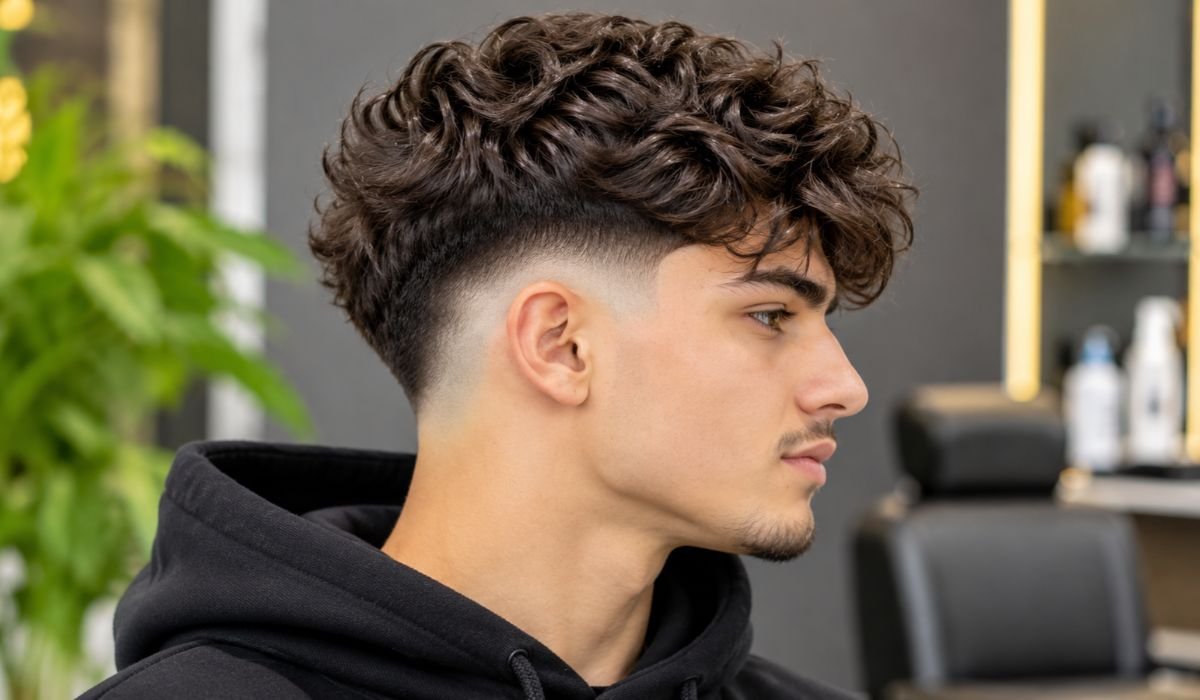
A great haircut should complement your natural hair texture, face shape, and personal style without requiring hours of daily maintenance. The Low Burst Fade is a popular choice for men who want clean sides, a distinctive curved fade around the ears, and enough length to create different hairstyles on top. It offers a balance between a modern appearance and a natural-looking finish.
Unlike a traditional low fade, which follows a more uniform path around the head, this haircut creates a rounded shape around each ear. The fade stays relatively low, keeping more hair around the upper sides while allowing the back to retain its natural length. This makes it especially appealing for men who enjoy textured hairstyles, curls, waves, and modern mullets.
Another advantage is its versatility. You can combine the cut with a textured crop, wavy brush-up, curly top, coily hairstyle, or short mullet. The final appearance depends on how high the fade starts, how short the hair gets around the ears, and how much length your barber preserves at the back.
In this guide, you’ll discover five stylish variations, six visual reference ideas, important differences between similar haircuts, and exactly what to tell your barber to get the result you want.
What Makes a Fade a Drop?
A Low Burst Fade is a men’s haircut featuring a curved, semicircular fade that wraps around the ear while keeping the transition relatively close to the lower sides of the head.
The word low describes the placement of the fade, while burst describes its rounded shape. These are two different characteristics that work together to create the finished haircut.
Instead of creating a straight fading line from the temples toward the neckline, the barber gradually shortens the hair around the ear. The blend follows the natural curve of the head, creating a clean outline without removing too much length from the back.
Here are the main characteristics:
- Low placement: The fading process begins close to the ear rather than extending high toward the temples.
- Rounded shape: The shortest section curves around the ear in a half-circle.
- Longer back: The center-back section can retain more length than a conventional fade.
- Flexible top: You can choose short, medium, or long hair depending on your preferred hairstyle.
- Customizable finish: The fade can finish with a skin-close, shadow, or softer tapered appearance.
One important detail is that the haircut doesn’t automatically require a skin fade. Your barber can leave a small amount of hair at the shortest point for a softer result.
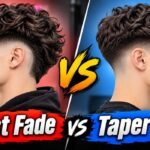
The low burst taper fade is another commonly used search term for this look. It generally describes a softer blend that combines the curved burst shape with gradual tapering around the edges.
Choose Height, Finish and the Back Separately
Before sitting in the barber’s chair, understand that three separate decisions influence the final result: fade height, shortest finish, and back shape.
Many people simply ask for a burst haircut without explaining these details. However, two barbers might interpret the same request differently.
Compare Your Preferences First
Consider these three elements before choosing your preferred variation.
1. Fade height
The height determines how much of the side area gets shortened.
- Low: Keeps the curved fade close to the ear and creates a subtle appearance.
- Mid: Moves the curve higher and creates more contrast around the sides.
- High: Removes more hair above the ear and produces a noticeably bolder finish.
If you prefer a natural-looking haircut, keeping the curve low is a sensible starting point.
2. Fade finish
The finish determines how short the hair becomes at the bottom of the fade.
- Skin finish: Removes the hair down to the skin for maximum contrast.
- Zero finish: Uses an extremely short setting while retaining a slight shadow, depending on the tool.
- Shadow finish: Keeps a darker appearance near the bottom for a softer transition.
A shadow finish generally requires less attention to visible regrowth than a very tight skin finish.
3. Back shape
The rear section is particularly important because it can change the entire personality of the haircut.
You can choose:
- Natural rounded back for a balanced appearance.
- Tapered neckline for a cleaner and more conservative finish.
- Longer nape for a short mullet-inspired appearance.
- Pointed or V-shaped neckline for a sharper outline.
Remember that a burst fade and a mullet are not automatically the same haircut. The length and shape at the back determine whether the finished style has a mullet appearance.
Read Related Post: High Taper Fade: 5 Best Styles & Complete Barber Guide
Low Burst Fade: Six Visual References
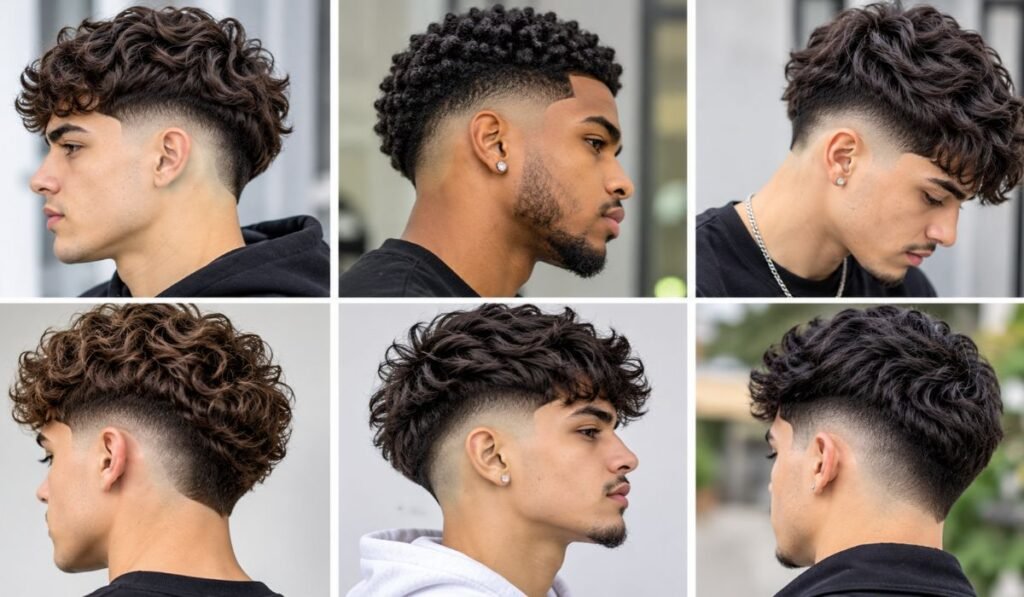
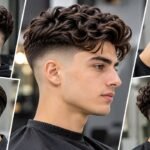
Before choosing a specific style, examine the haircut from different angles. A front-facing photograph alone may not show how the curved blend looks around the ears or how much length remains at the back.
Use these six visual references when discussing your desired result with your barber:
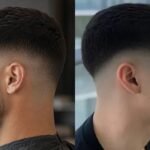
- Left-side view: Shows where the fade begins and how the curve follows the ear.
- Right-side view: Helps identify whether both sides have a balanced appearance.
- Front view: Shows how the top connects with the hairline and forehead.
- Rear view: Reveals the amount of length preserved around the nape.
- Three-quarter view: Displays the relationship between the top, side profile, and back.
- Close-up ear view: Makes the fade’s curved shape and blending technique easier to understand.
When examining reference photographs, pay attention to the actual haircut rather than the model’s facial features or hair density.
For the best results, bring at least two photographs: one showing the side profile and another showing the back. This helps your barber understand the overall shape rather than copying only one section.
Five Low Burst Fade Styles to Consider
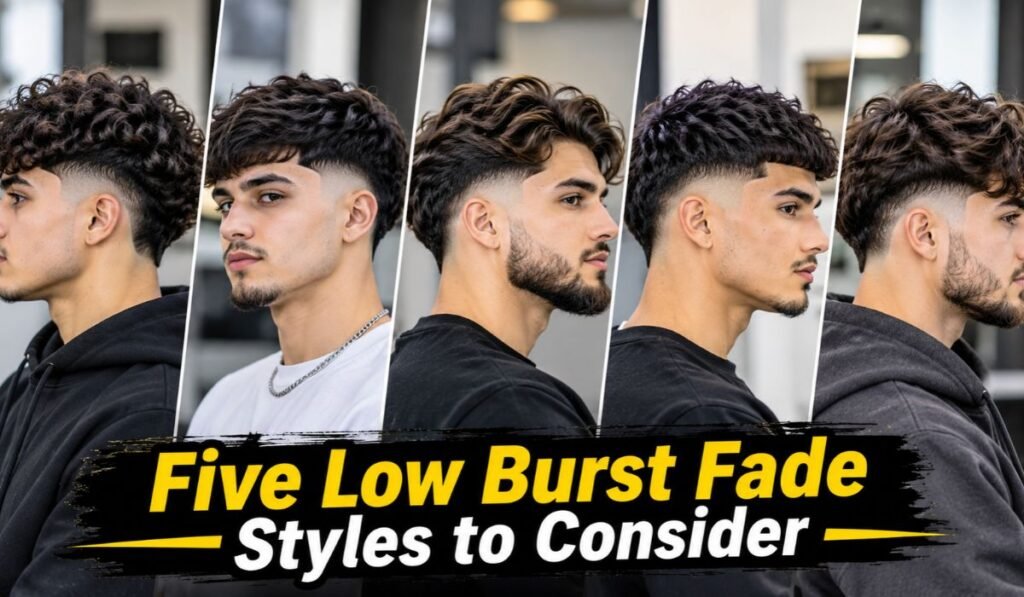
The biggest advantage of this haircut is its ability to complement different hair textures and top lengths. You don’t need a particular hair type to enjoy the curved fade.
Here are five variations worth considering.
1. Low Burst Fade With a Textured Crop
The textured crop is an excellent choice for men who prefer a modern, low-maintenance hairstyle. It combines short, layered hair on top with a clean curved fade around the ears.
The top usually features choppy layers that create natural movement and definition. You can wear the fringe forward, slightly toward one side, or in a messy arrangement.
This combination works particularly well with thick and straight hair because removing excess weight helps the top appear more controlled.
What makes this style attractive?
- Textured layers create a fuller appearance.
- Short fringe gives the haircut a contemporary finish.
- The curved sides add definition without requiring a high fade.
- Minimal styling products are needed for everyday wear.
For styling, apply a small amount of matte clay to dry or slightly damp hair. Use your fingers to separate the layers and create a natural, textured finish.
If you want a practical hairstyle for school, work, or everyday activities, this is a strong option.
2. Low Burst Fade With a Wavy Top
Natural waves add movement and volume, making them a great match for a curved fade. Rather than cutting the entire top short, your barber preserves enough length for the waves to form their natural pattern.
The sides remain clean, while the upper section can be brushed upward, forward, or slightly backward.
This hairstyle is particularly suitable for men who have naturally wavy hair but don’t want a completely traditional haircut.
Why consider this combination?
- Natural waves provide texture without complicated styling.
- The curved fade keeps the area around the ears neat.
- Medium top length creates several styling possibilities.
- It works with both relaxed and more polished appearances.
For everyday styling, use a lightweight sea salt spray or a small amount of styling cream. Avoid applying too much product because heavy formulas can make natural waves look flat.
A blow-dryer with a diffuser attachment can also help improve volume while maintaining the natural wave pattern.
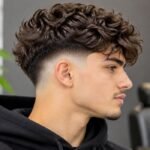
3. Low Burst Fade With Curls
Curly hair creates a distinctive contrast against shorter sides. The curls remain visible on top, while the barber shapes the area around the ears with a gradual curved blend.
You can choose tight curls, loose curls, or a fuller curly top depending on your natural hair pattern.
The main goal is to preserve the natural curl structure instead of removing too much length.
A Low Burst Fade with curls is especially attractive because the rounded side profile complements the movement and volume of the upper hair.
Best features include:
- Defined curls create natural volume.
- The curved fade highlights the ear area.
- Different curl lengths provide styling flexibility.
- The haircut works with casual and modern outfits.
For maintenance, use a lightweight curl cream or leave-in conditioner. Apply the product evenly and allow the curls to dry naturally or use a diffuser on a low setting.
Ask your barber to consider curl shrinkage before deciding how much length to remove. Curly hair can appear considerably shorter when dry than when wet.
4. Low Burst Fade With a Coily Top
Men with tightly coiled or naturally textured hair can also benefit from this haircut. The combination creates a clean outline around the ears while preserving the natural fullness of the top.
The upper section can feature a short afro, sponge curls, defined coils, or a slightly rounded shape.
One of the most important parts of this variation is maintaining the natural structure of the hair. Your barber should understand how your coils grow and how much length they lose through shrinkage.
Reasons to choose this style:
- Preserves natural hair texture.
- Creates a clean transition around the ears.
- Works with short and medium-length coily hairstyles.
- Can be customized with a natural or sharper hairline.
For daily care, use a moisturizing leave-in conditioner or a suitable curl product. A sponge can help define coils when used gently, while a satin or silk pillowcase can help reduce friction during sleep.
Ask your barber to avoid cutting the top too short if you want to maintain visible coil definition.
5. Low Burst Fade With a Short Mullet
If you want something more expressive, combine the curved fade with a short mullet.
This variation keeps the sides clean while preserving additional length at the back. The top can remain textured, slightly wavy, or layered to create a smooth connection with the longer nape.
The result is a modern haircut that feels more adventurous than a traditional short fade.
A Low Burst Fade with a short mullet is a particularly useful choice for men who enjoy contemporary streetwear, alternative hairstyles, or textured haircuts.
Important details to consider:
- Keep the fade close to the ears.
- Preserve enough length at the back to create a visible mullet shape.
- Add layers to prevent the rear section from looking too heavy.
- Decide whether you prefer a rounded or slightly pointed neckline.
For styling, use a lightweight texture cream or matte paste. Work the product through the top and back to create separation without making the hair appear greasy.
If you aren’t ready for a dramatic mullet, ask for a subtle version with a shorter, blended nape.
Low Burst Fade vs Low Taper and Drop Fade
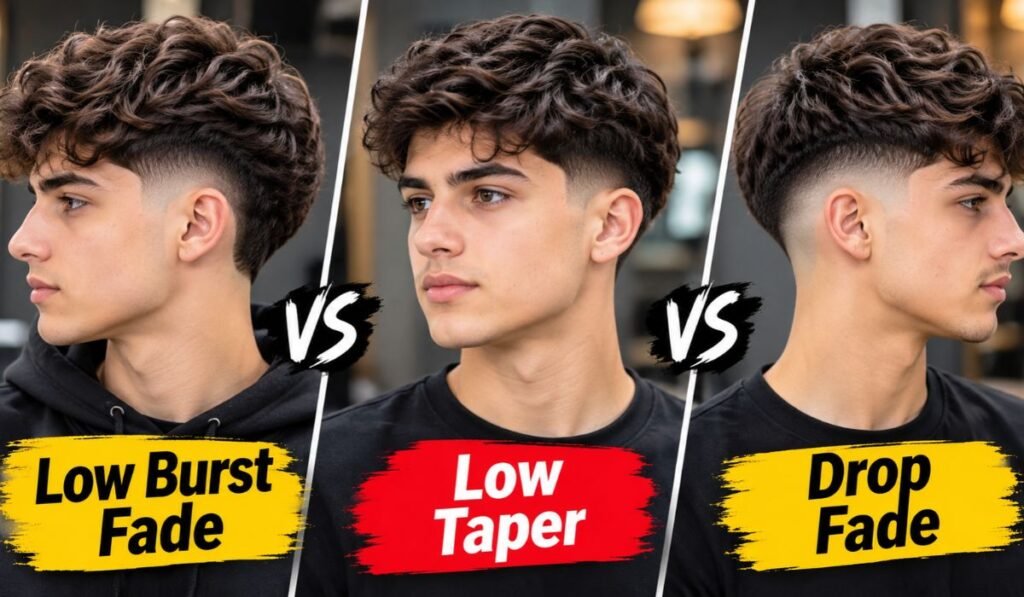
These three haircuts are often confused because they can all create clean-looking sides. However, their fading patterns and overall shapes are different.
The easiest way to understand them is to examine where the shortest hair appears and how the blend travels around the head.
| Feature | Low Burst Fade | Low Taper | Drop Fade |
| Fade pattern | Curves around the ear | Focuses on edges | Curves downward behind the ear |
| Side appearance | Rounded and defined | Natural and subtle | Smooth and curved |
| Back section | Can retain more length | Usually stays natural | Fade continues toward the nape |
| Contrast | Low to high | Usually low | Low to high |
| Popular pairings | Curls, crops, mullets | Side parts, short styles | Pompadours, crops, textured tops |
Low Burst Fade vs Low Taper
A low taper mainly cleans up the sideburns and neckline without creating a large curved fading area around the ear.
A burst haircut, on the other hand, creates a more noticeable semicircular shape. If you want something subtle, a low taper may be more suitable. If you want a distinctive curved profile, choose the burst variation.
The phrase low taper burst is sometimes used when people want a softer taper combined with the curved burst design. Explain the shape to your barber because terminology can vary between barbershops.
Low Burst Fade vs Drop Fade
A drop fade follows a descending curve behind the ear and continues toward the back of the head.
A burst fade concentrates its curved shape around the ear, usually preserving more length in the center-back section.
The difference becomes easier to recognize when you compare the rear view rather than looking only at the sides.
If you want to maintain a longer back or create a short mullet, the burst design is worth considering. If you prefer a fade that continues naturally toward the neckline, a drop fade may be the better choice.
What to Tell Your Barber
Explaining your preferred haircut clearly is just as important as choosing the right reference photograph.
Instead of simply asking for a burst haircut, describe the height, shape, finish, top length, and rear section separately.
You can use this barber script:
Please give me a low burst fade around the ears. Keep the curved blend low, starting close to the ear, and don’t take it too high toward the temples. Leave enough length on top for my preferred hairstyle. Keep the back natural, and only taper the neckline if necessary. I want a smooth blend rather than a harsh line.
You can adjust this request according to your preferred finish.
For a softer appearance, ask for a shadow fade. For a stronger contrast, request a skin finish. If you want a mullet, specifically tell your barber to preserve the length at the nape.
Also consider whether you want the sideburns connected to your beard. A properly blended beard connection can make the haircut look more balanced.
Check These Details Before Leaving the Chair
Before leaving the barbershop, take a moment to inspect the finished haircut.
Use this checklist:
- Is the fade positioned low enough?
- Does the curved shape follow both ears?
- Are the left and right sides balanced?
- Is the top the length you requested?
- Has the barber preserved the desired back shape?
- Is the neckline clean and properly blended?
- Does the beard connection look natural, if applicable?
- Is there any unwanted harsh line or uneven transition?
Ask your barber to show you the rear view using a mirror. This is particularly important if you are choosing a mullet-inspired style or want additional length at the back.
A few minutes of checking can prevent disappointment after leaving the chair.
Style the Top and Plan the Upkeep
The upper hairstyle determines how much daily effort your haircut requires. The sides may already look clean, but the top needs the right styling technique to maintain its shape.
Choose products according to your natural texture.
| Hair type or style | Recommended product | Styling approach |
| Textured crop | Matte clay | Separate the layers with fingers |
| Wavy top | Sea salt spray | Enhance natural movement |
| Curly top | Curl cream | Define curls without stiffness |
| Coily top | Leave-in conditioner | Maintain moisture and definition |
| Short mullet | Texture paste | Add separation to the top and back |
Avoid using too much product. A small amount is usually enough to create definition without making the hair heavy.
How often should you get a trim?
Your maintenance schedule depends on hair growth, fade finish, and personal preference.
- Every 2 weeks: Suitable if you prefer an especially sharp and freshly blended appearance.
- Every 3 weeks: A reasonable schedule for maintaining a defined curved fade.
- Every 4 weeks: Suitable for softer finishes and people who don’t mind some natural regrowth.
These are general estimates rather than fixed rules. A skin-close finish may show regrowth sooner than a shadow fade.
One advantage of keeping the fade low is that the growing sides can look relatively natural for longer. However, the area immediately around the ears may lose its definition as the hair grows.
You should also maintain the top between barber visits. Trim split ends when needed, use suitable products for your hair texture, and avoid repeatedly applying heavy styling formulas.
If you prefer less upkeep, choose a slightly longer finish rather than an extremely tight skin fade. This can make the haircut more forgiving as it grows.
FAQ’s
Is a Low Burst Fade a Skin Fade?
No. It describes the curved shape and low placement, not the shortest finish. You can choose a skin, zero, or shadow finish depending on your preference.
Does It Work With Straight Hair?
Yes. Straight hair works well with this haircut, especially when paired with a textured crop, short fringe, side part, or brushed-up top.
Is a Low Burst Fade the Same as a Mullet?
No. The fade curves around the ears, while a mullet keeps additional length at the back. Combining both creates a burst fade mullet.
Can I Keep the Top Long?
Yes. You can preserve medium or long hair on top and style it with waves, curls, a quiff, or a textured finish.
What If I Want Less Upkeep?
Choose a softer shadow finish, keep the top manageable, and avoid an extremely tight skin fade. Schedule trims according to how quickly your hair grows.
Conclusion
The Low Burst Fade is a versatile haircut that combines a clean curved shape around the ears with plenty of styling flexibility. Whether you prefer a textured crop, wavy top, defined curls, coily hairstyle, or short mullet, you can customize the cut to match your natural hair texture and personal style.
The key is to communicate your preferences clearly. Decide how low you want the fade, choose the shortest finish, and explain how much length you want to preserve at the back.
Before your next appointment, bring clear side and rear reference photographs and use the barber script in this guide. With the right combination of shape, blending, and top length, you can achieve a modern haircut that looks clean, balanced, and easy to maintain.

Alex is a passionate hairstyle enthusiast and the creator of WowFades. He loves exploring modern haircuts, stylish hairstyles, and fresh fade trends, sharing practical inspiration to help readers discover new looks and feel confident about their personal style.



1 thought on “Low Burst Fade: 5 Styles & What to Tell Your Barber”